Understanding the Zhenmei P Series LED Holographic Screen
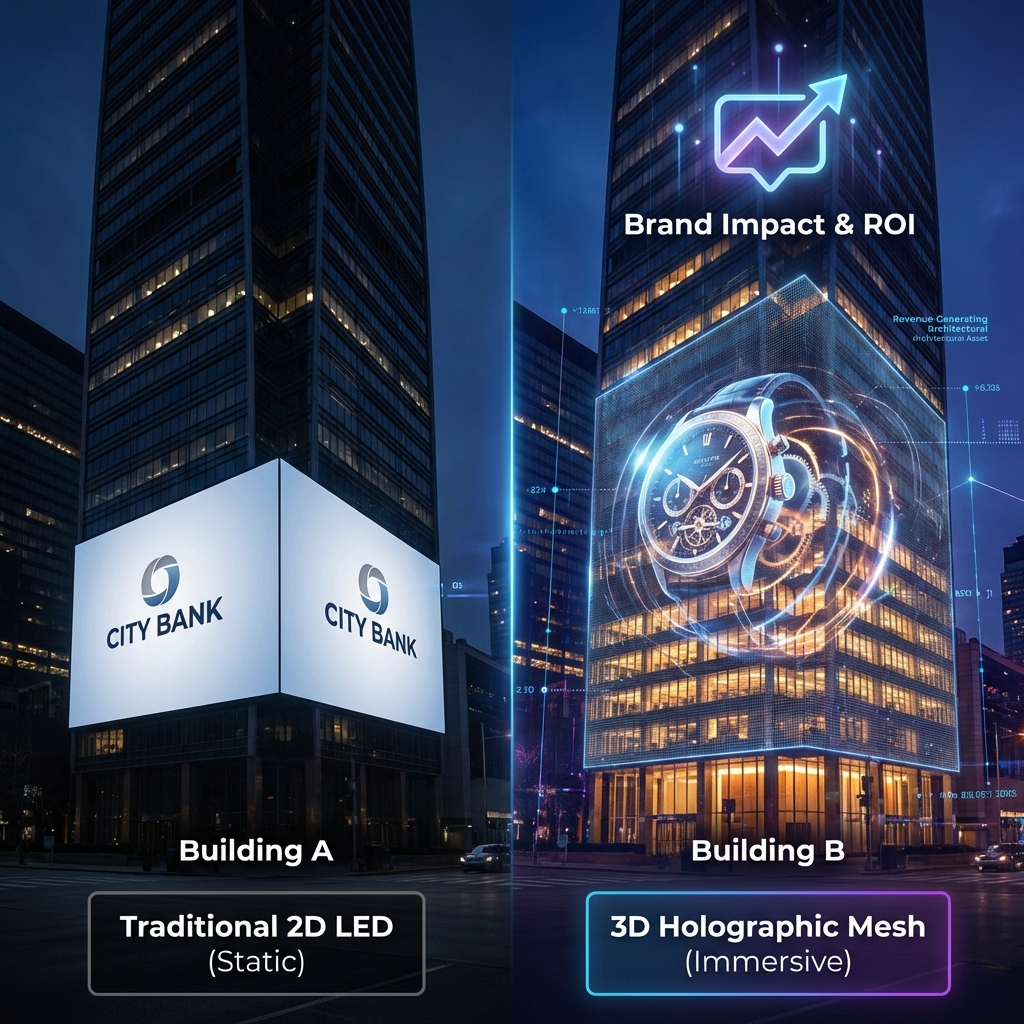
A LED holographic screen, particularly the P Series, differentiates itself from standard LED displays by offering a high-transparency medium that allows "floating" 3D visuals to appear without obscuring the background, effectively blending digital content with physical environments.
These cutting-edge holographic LED screens boast transparency rates typically ranging from 85% to 95% in 2025, enabling clear sightlines and creating an illusion of content suspended in mid-air, enhancing visual engagement without blocking natural light or views.
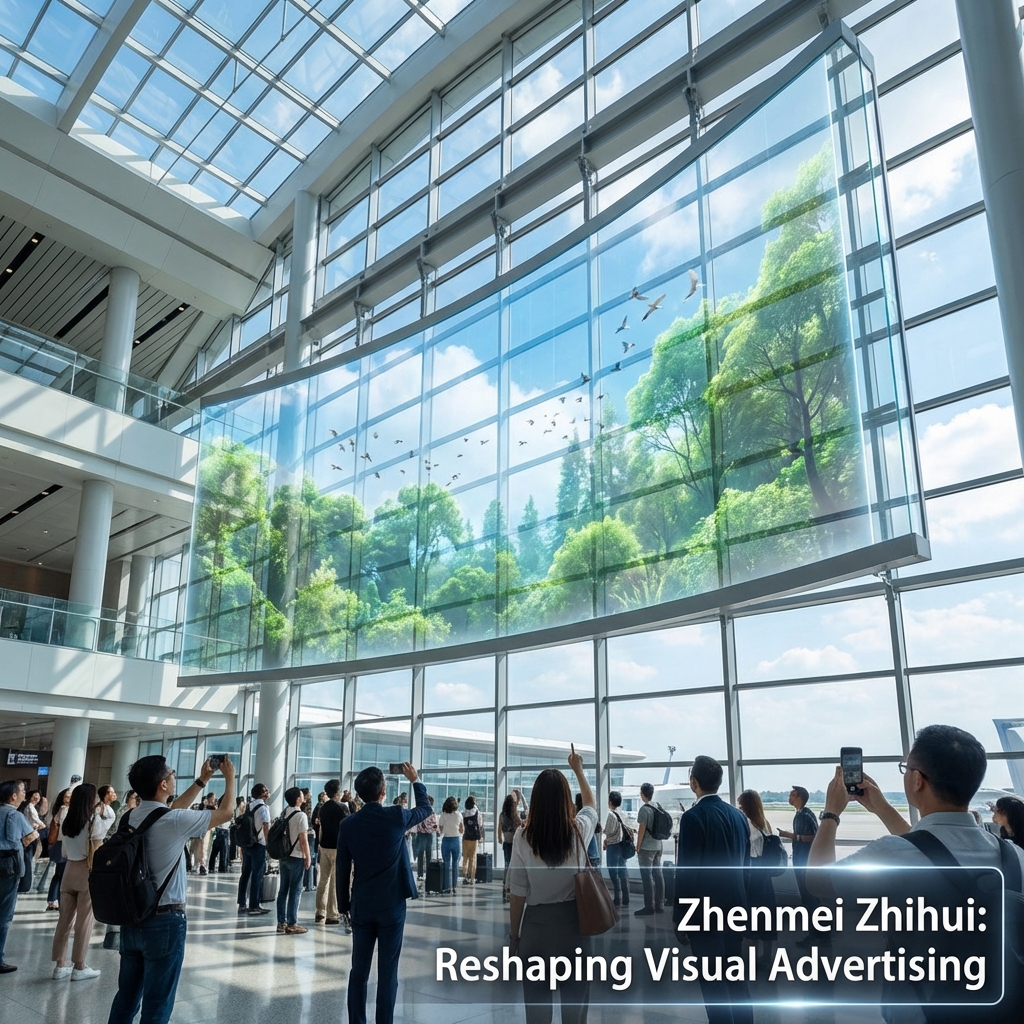
Industries like high-end retail, museums, airports, luxury brand showrooms, and architectural firms are primary beneficiaries, leveraging these displays for captivating product promotions, immersive storytelling, and dynamic informational signage that truly stands out.
Zhenmei P Series holographic screens support a variety of installation options, including suspended, hung, freestanding, and custom-integrated setups, offering unparalleled flexibility for diverse B2B project requirements.
While the term "holographic" is often used loosely, these screens achieve a convincing naked-eye 3D effect through a combination of ultra-high transparency and advanced content rendering, creating an illusion of depth and movement.
Maintenance for transparent LED displays like the P Series typically involves periodic cleaning of modules, firmware updates to ensure optimal performance, and brightness calibration to maintain consistent visual quality over its lifecycle.
Unveiling the Zhenmei P Series LED Holographic Screen: Core Concepts & Principles
The digital display landscape has always pushed boundaries, from rudimentary monochrome panels to today's vibrant, high-definition screens. But the real game-changer in B2B visual communication isn't just about higher resolution; it's about blending the digital with the physical, creating experiences that feel less like watching a screen and more like interacting with light itself. This is precisely where the Zhenmei P Series LED Holographic Screen steps in, carving out its niche not just as a display, but as an architectural and experiential element.
What we're witnessing with the P Series isn't magic, though it often feels like it. It's the culmination of intricate engineering and thoughtful design, bringing truly "floating" visuals to life. Forget bulky screens that dominate a space; imagine instead dynamic content appearing to hover, almost ethereally, allowing light and views to pass right through where the digital content isn't. This isn't your grandfather's LED billboard; it's a sophisticated interplay of light, transparency, and perception, specifically engineered for B2B environments that demand both impact and subtlety.
Decoding the 'Holographic Effect': How Floating Visuals Are Achieved on LED Screens
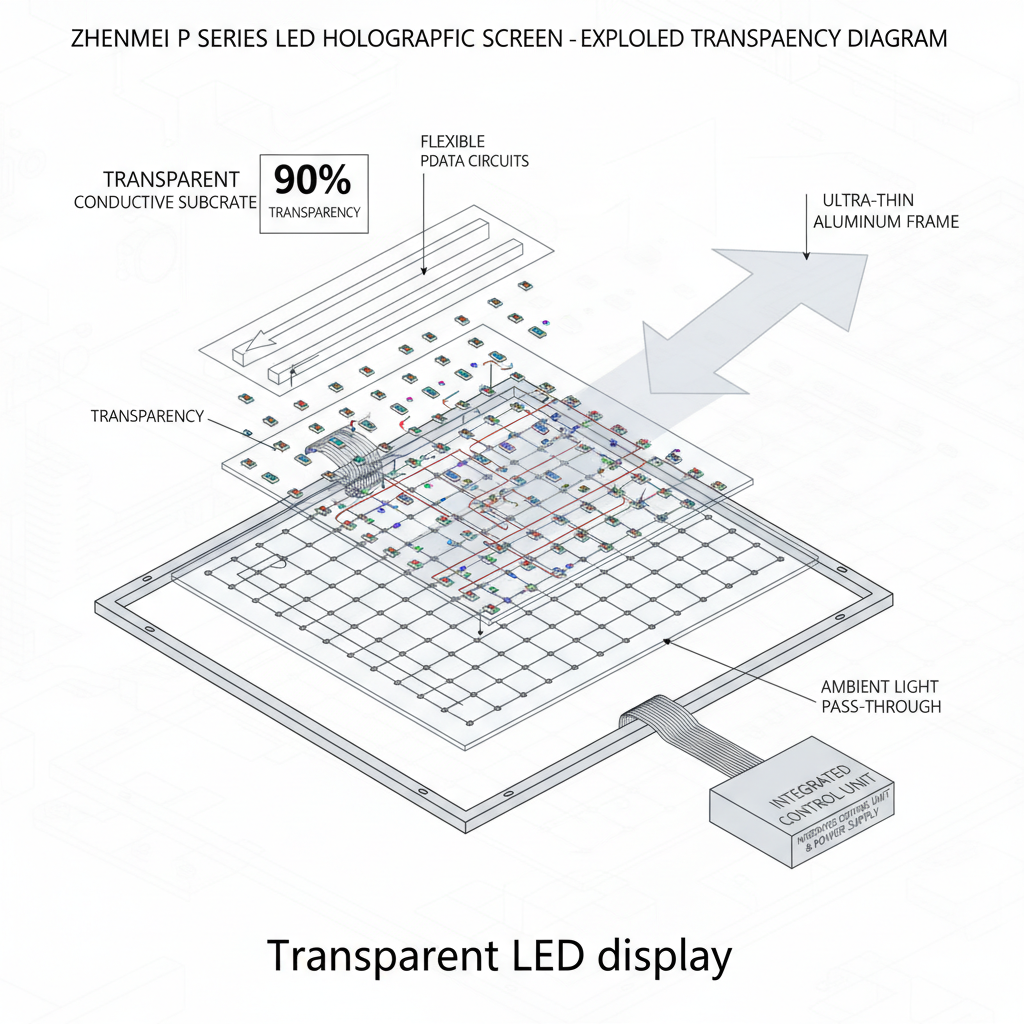
Let's cut to the chase: when we talk about "holographic LED screens," we're often talking about an effect rather than true laser-based holography in the scientific sense. The Zhenmei P Series achieves its stunning "floating visual" capability through a clever marriage of ultra-high transparency and specific content creation techniques. At its heart, the screen itself is a transparent LED display. Unlike opaque LED panels where pixels are densely packed and backed by an solid substrate, transparent LEDs are built on a highly porous structure—often a grid-like or mesh design—where individual LED diodes are mounted on almost invisible, conductive lines.
The "holographic" illusion emerges when content is specifically designed to leverage this transparency. Imagine displaying bright, high-contrast graphics or animations against a dark or black background. The dark areas of the content effectively become transparent, allowing you to see through the screen, while the illuminated pixels project vibrant images that seem to float in mid-air. It's akin to seeing a ghost image, present yet permeable, making it far more captivating than a conventional screen. This mechanism is key to understanding how a holographic led screen display truly delivers impact, making the digital feel integrated with the physical space rather than just overlaid.
The Synergy of Advanced Transparent LED Technology and Depth Illusion
The technological bedrock of the P Series lies in its advanced transparent LED modules. These aren't just 'see-through' in a rudimentary way; they represent a significant leap in LED manufacturing precision. The smaller the individual LED components (SMDs) and the finer the conductive lines, the higher the overall transparency rate and the more seamless the visual effect. This delicate balance ensures that the screen can achieve exceptional brightness and color fidelity while maintaining a significant optical pass-through.
When this high transparency is combined with expertly crafted 3D content—often employing parallax effects, subtle depth cues, and sophisticated motion graphics—the human brain perceives a remarkable sense of depth. The content appears to have volume and to exist within the physical environment, rather than flat on a surface. This isn't just about pixel pitch, though that's crucial; it’s about the engineering of the entire display substrate and the intelligent use of visual design principles. The result is a dynamic holographic projection screen material that transforms mundane window spaces or exhibition booths into interactive, visually rich experiences, drawing viewers in without creating a physical barrier.
Introducing the P Series: A High-End Suspended Display Device for Modern B2B Needs
Zhenmei Wisdom has developed the P Series specifically to meet the demanding requirements of high-end B2B display installations. Our focus wasn't just on making a screen transparent, but on creating a versatile, reliable, and aesthetically integrated solution. The P Series is distinguished as a "floating" display device precisely because its design inherently supports various hoisting scenarios. Whether suspended from ceilings, integrated into architectural facades, or used as dynamic partition walls, its lightweight and frameless design ensures minimal visual intrusion when inactive and maximum impact when active.
For businesses looking to make a statement—be it a luxury retail brand wanting to showcase new products with an ethereal visual, an airport seeking dynamic passenger information displays that don't obstruct views, or an automotive showroom creating an immersive product launch—the P Series offers a sophisticated blend of form and function. It's not just about displaying information; it's about crafting an experience, enhancing brand perception, and elevating the entire aesthetic of a commercial space. From an engineering perspective, this means robust structural integrity for safe suspension, efficient thermal management for longevity, and ease of modular connection for scalable projects.
Zhenmei P Series: Mastering Technical Specifications for Optimal B2B Performance in 2025
In the world of B2B display technology, "good enough" simply doesn't cut it. Especially when we're talking about high-impact solutions like the Zhenmei P Series LED Holographic Screen, the devil is very much in the details—the technical specifications that dictate performance, longevity, and ultimately, return on investment. For procurement managers and system integrators, understanding these metrics isn't just about numbers; it's about ensuring the chosen solution truly aligns with project goals and environmental conditions.
The P Series is engineered not only to captivate but to perform reliably under demanding commercial use cases. It balances cutting-edge visual fidelity with practical considerations like durability, ease of maintenance, and energy efficiency, setting a benchmark for LED transparent signage solutions in 2025.
Critical Metrics: Pixel Pitch, Transparency Rate, and Brightness for Superior Viewing Experiences
When evaluating any LED display, especially a transparent one designed for a "holographic" effect, three metrics stand out as paramount:
Pixel Pitch (P): This is the distance between the centers of two adjacent LED pixels, measured in millimeters. For the P Series, a smaller pixel pitch is absolutely crucial for creating a convincing holographic illusion, especially in indoor or close-viewing environments like retail storefronts or exhibition booths. A finer pixel pitch (e.g., P2.8, P3.9) means higher pixel density, which translates into sharper images, smoother animations, and a more seamless perceived depth. For close-up viewing, you want a pitch small enough that individual pixels aren't easily discernable, making the content appear truly "floating."
Transparency Rate: This metric, typically expressed as a percentage, indicates how much light can pass through the screen when the pixels are off or displaying black content. As per industry trends, typical transparency rates for high-quality holographic LED screens in 2025 range from 85% to 95%. The Zhenmei P Series is designed to be on the higher end of this spectrum, ensuring minimal visual obstruction and allowing natural light or ambient environment to remain visible. This is vital for applications where maintaining views or a sense of open space is critical.
Brightness (Nits/cd/m²): Measured in nits (candelas per square meter), brightness determines how well the screen's content can be seen in various lighting conditions. For indoor applications, sufficient brightness ensures clarity and vibrancy, while outdoor or semi-outdoor use (like storefronts facing direct sunlight) demands significantly higher nits (e.g., 5000+ nits) to combat glare and maintain visibility. The P Series offers robust brightness capabilities, adaptable for both brightly lit interiors and challenging exterior conditions, allowing for impactful daytime and nighttime displays.
It's a delicate dance between these three. A smaller pixel pitch often can reduce transparency slightly, and higher brightness can increase power consumption. Zhenmei Wisdom's engineering ensures an optimized balance, delivering superior visual quality without compromising the core transparent functionality.
Engineered for Excellence: Ultra-Slim Design, Lightweight Modules, and Frameless Integration
The physical form factor of the P Series is as critical as its electronic performance, especially for its intended hoisting and architectural integration scenarios. We've focused heavily on:
Ultra-Slim Design: The panel thickness is minimized, reducing its visual footprint and allowing it to sit flush or subtly within architectural elements. This sleek profile is key to the "floating" illusion, as the physical structure of the screen itself becomes almost imperceptible.
Lightweight Modules: Given that the P Series is designed for suspended installations, lightweight construction is not just a feature; it's a safety and design imperative. Lighter modules reduce structural load requirements, simplifying installation, expanding placement possibilities, and often lowering installation costs. This is crucial for large-scale projects where cumulative weight can be a significant engineering challenge.
Frameless Integration: Traditional LED screens often have thick bezels or frames. The P Series adopts a three-sided frameless design, allowing for near-seamless拼接 of multiple modules. This creates a larger, uninterrupted transparent canvas, essential for truly immersive and expansive visual narratives in high-end environments. When you're trying to achieve a magical floating effect, visible frames are counterproductive.
These design choices are not merely aesthetic; they are engineered solutions to common pain points in high-impact B2B display deployments, offering architects and designers greater freedom and operational teams easier handling.
Seamless Scalability and Dynamic Content Management Systems for Flexible Display Solutions
The P Series is built on a modular design principle, meaning individual panels can be combined to create displays of virtually any size or configuration. This scalability is a huge advantage for B2B clients whose needs might evolve or who require custom, large-format solutions. Whether it's a small retail window display or a massive transparent facade, the system can adapt.
Furthermore, integrating a reliable and intuitive Content Management System (CMS) is paramount. A state-of-the-art CMS for the P Series allows for:
Real-time Content Updates: Schedule and update videos, animations, and interactive content remotely and instantaneously.
Multi-Zone Playback: Divide the screen into multiple zones, playing different content simultaneously.
Interactivity: Support for touch, gesture, or sensor-based interactions, transforming passive displays into engaging experiences.
Analytics: Track content performance, viewing times, and audience engagement metrics.
Zhenmei Wisdom ensures compatibility with leading CMS platforms, providing clients with the flexibility to manage their dynamic visual assets effectively, keeping their messaging fresh and engaging. This robust backend is what truly unlocks the potential of the P Series beyond just a piece of hardware.
Strategic Applications: Where the Zhenmei P Series Transforms B2B Engagements and Beyond
In the B2B world, an investment in display technology isn't just about pixels and brightness; it's about strategic impact. It's about how a solution can drive engagement, enhance brand perception, or optimize operational efficiency. The Zhenmei P Series LED Holographic Screen, with its unique "floating visual" capability and flexible deployment, isn't just a screen – it’s a dynamic platform designed to fundamentally transform how businesses connect with their audiences. Its core strength lies in its ability to captivate without obscuring, making it a powerful tool across a myriad of commercial and architectural contexts.
We often see clients initially drawn to the sheer novelty, but they quickly discover the profound business advantages. This isn't just about being noticed; it’s about creating a memorable, value-driven interaction that traditional displays simply cannot replicate.
Redefining Retail & Storefronts with Captivating Transparent LED Signage
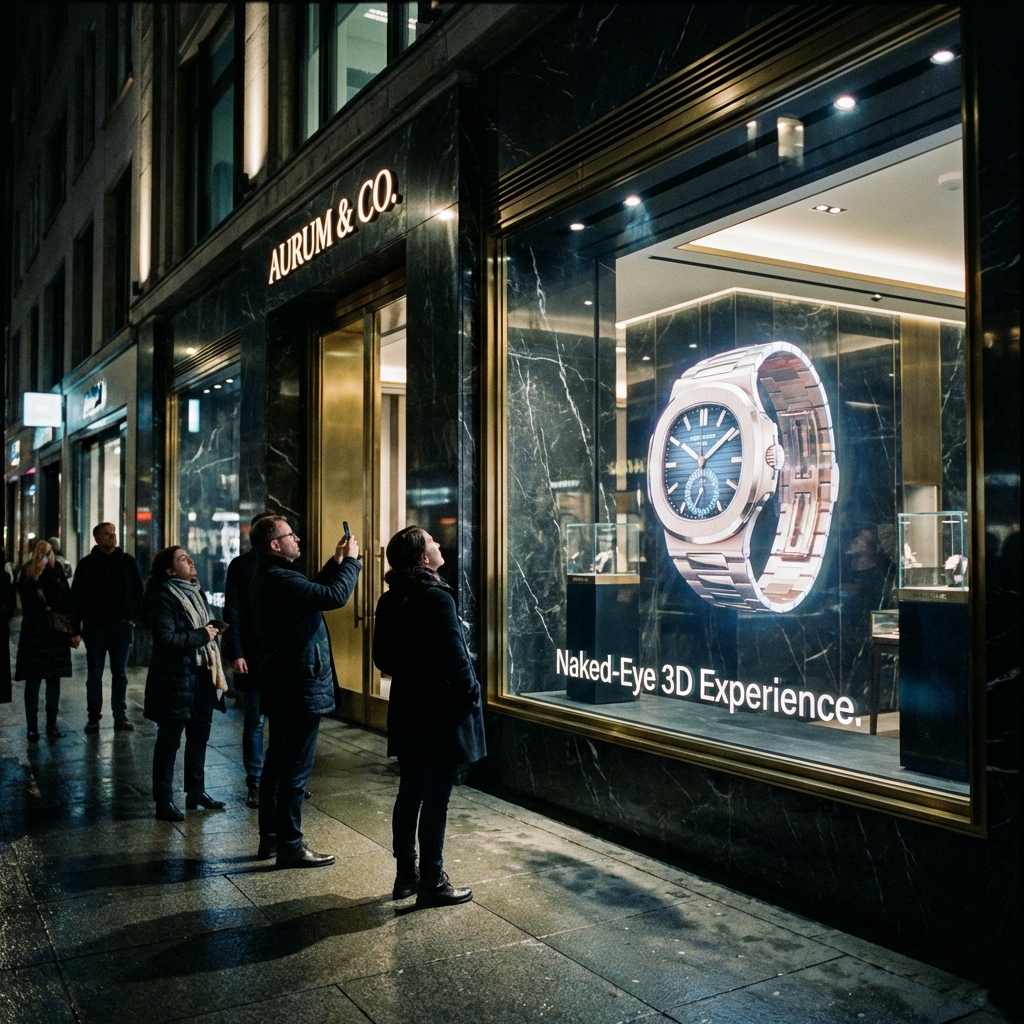
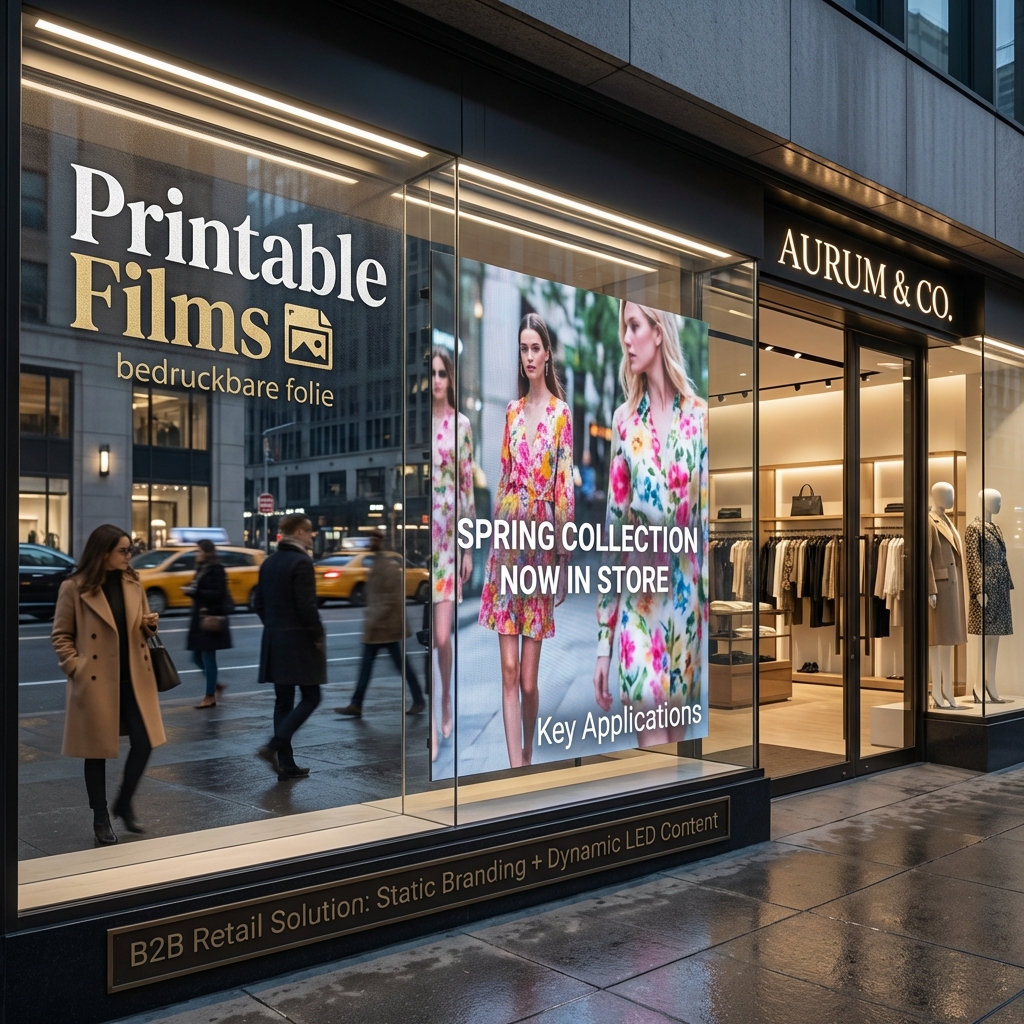
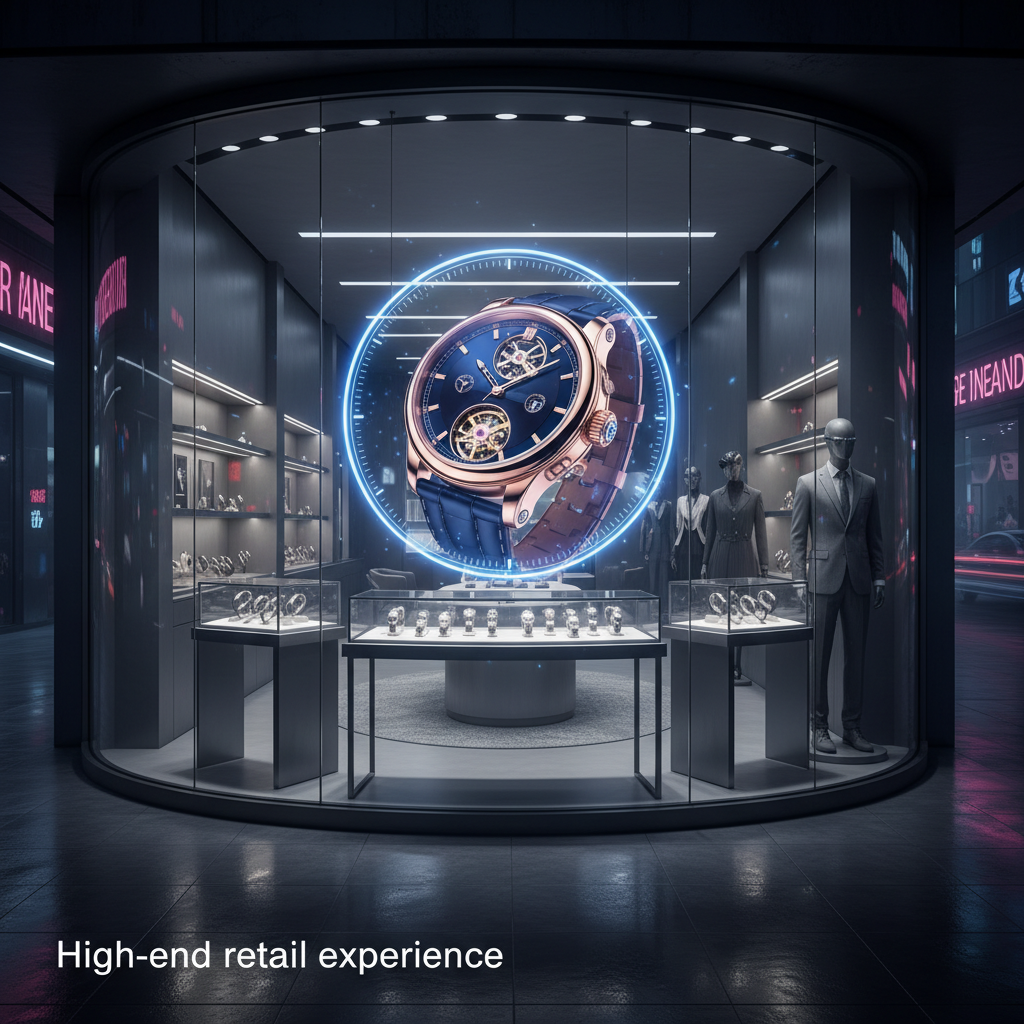
Imagine walking past a high-end boutique. Instead of a solid display blocking the interior, you see a stunning visual of a new product floating in mid-air, perfectly integrated with the merchandise behind the glass. This is the power of the P Series in retail. For a high transparency LED holographic screen for storefront, the benefits are manifold:
Enhanced Curb Appeal: It immediately draws attention, making a storefront dynamic and modern. It’s an instant differentiator on a busy street.
Dual Functionality: It serves as an active promotional tool while maintaining the visibility of actual products within the store, leveraging prime window space without sacrificing natural light.
Interactive Storytelling: Brands can showcase product features, fashion shows, or lifestyle narratives in a way that feels immersive and less like traditional advertising.
Seasonal Campaigns: Easily update content for holidays, sales, or new collections, providing unmatched flexibility compared to static signage.
From luxury fashion houses to cutting-edge electronics stores, the P Series turns passive window gazing into an active, engaging experience, directly influencing foot traffic and brand recall. It's not just about showing; it's about engaging.
Elevating Exhibitions, Events, and Luxury Spaces with Immersive Visual Displays
Exhibitions and events are fiercely competitive environments where capturing attention is paramount. In these settings, the P Series offers an unparalleled advantage:
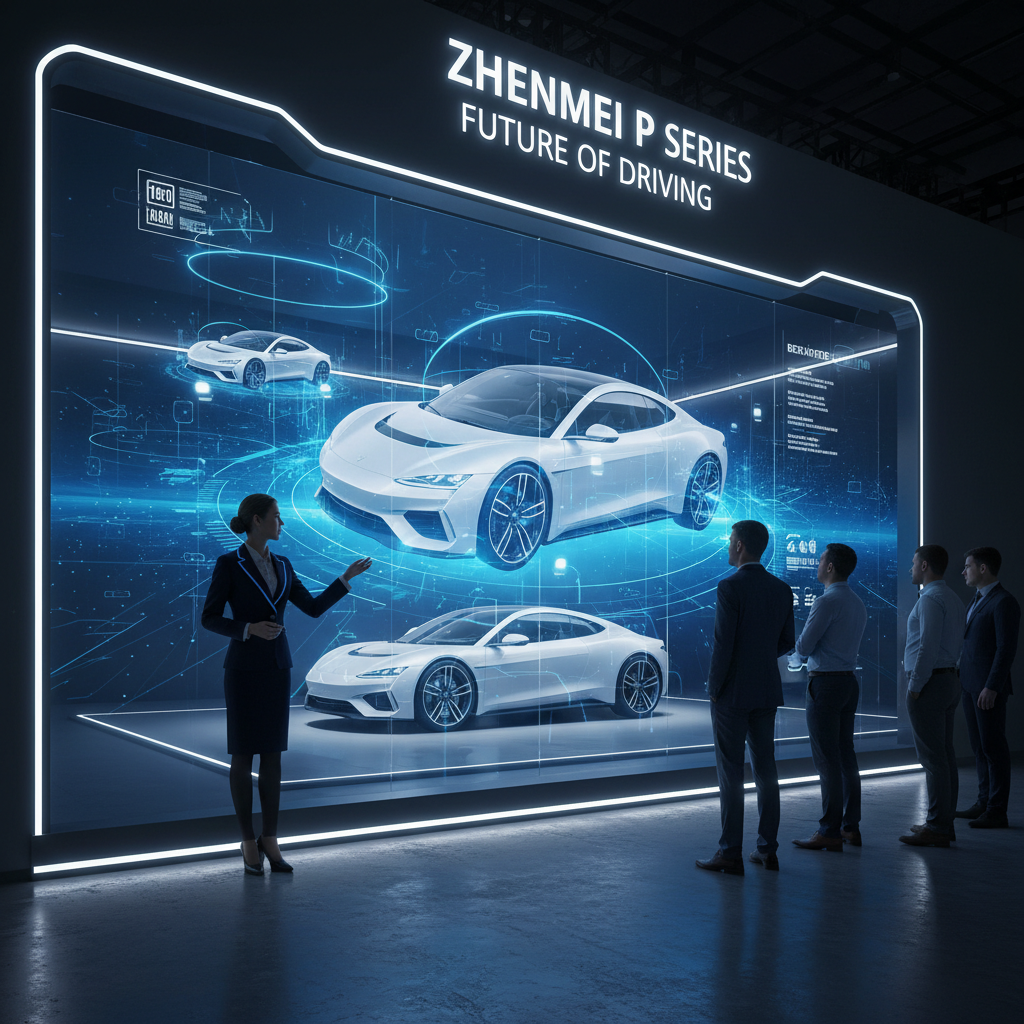
Immersive Booth Design: Create visually stunning, breathable exhibition stands where product demonstrations can be augmented by floating 3D graphics that explain features or highlight benefits. Attendees can look through the screen to see the physical product while digital content animates around it.
Dynamic Stage Backdrops: For corporate events or product launches, a transparent LED screen can serve as a futuristic backdrop, allowing presenters to stand behind or within dynamic visual effects, adding a layer of sophistication and theatricality.
Artistic Installations: In museums, galleries, or luxury lobbies, the P Series can display art, historical information, or brand messaging in a subtle yet captivating manner, complementing the existing architecture without overpowering it. Think of architectural glass transforming into a living canvas.
The ability to create immersive visual displays that are both present and transparent solves a critical design dilemma: how to incorporate high-impact digital content without creating solid, obstructing walls.
Specialized Hoisting Scenarios: Optimizing Suspended LED Display Solutions for Architectural Integration
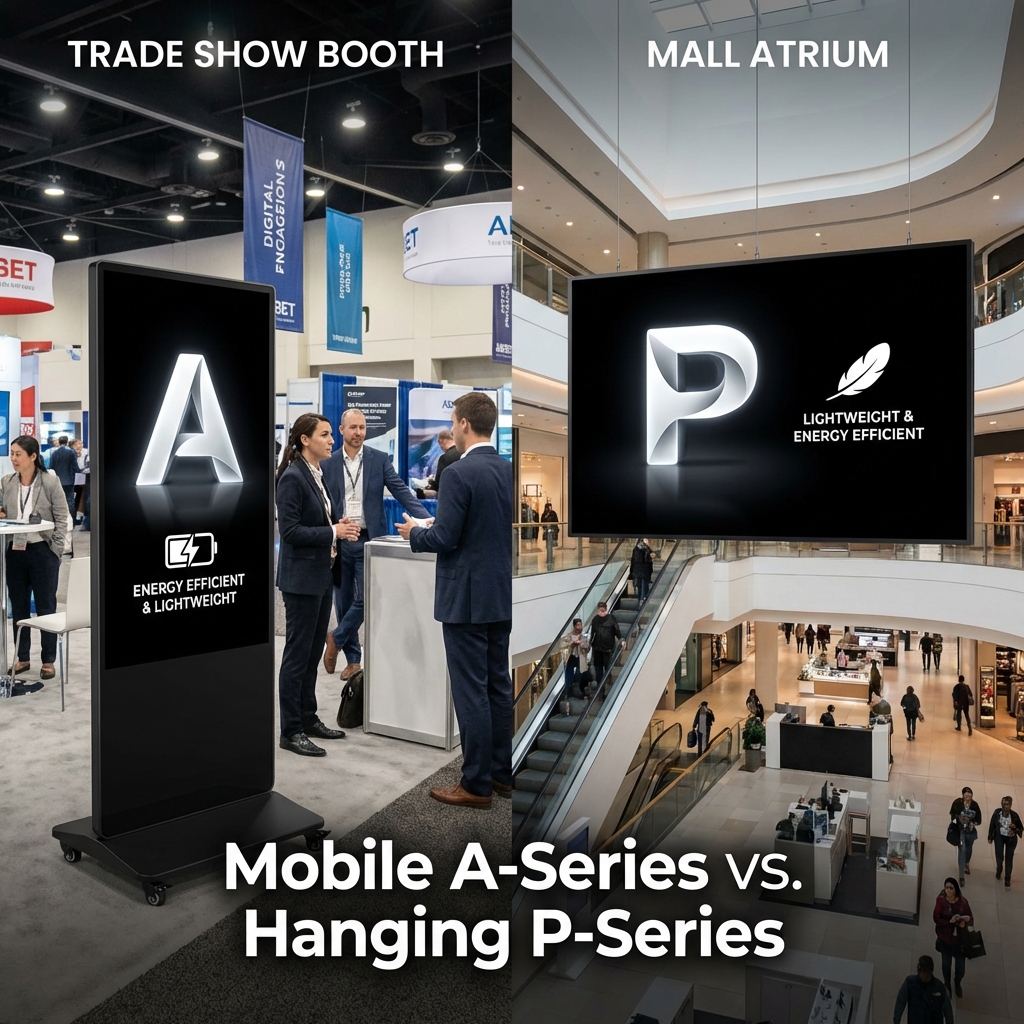
The Zhenmei P Series was designed with specialized hoisting scenarios in mind. This isn't a mere afterthought; it's a core engineering principle. Many B2B environments, particularly those with high ceilings or open-plan designs like shopping malls, atriums, transportation hubs, and large corporate lobbies, benefit immensely from LED suspended display solutions.
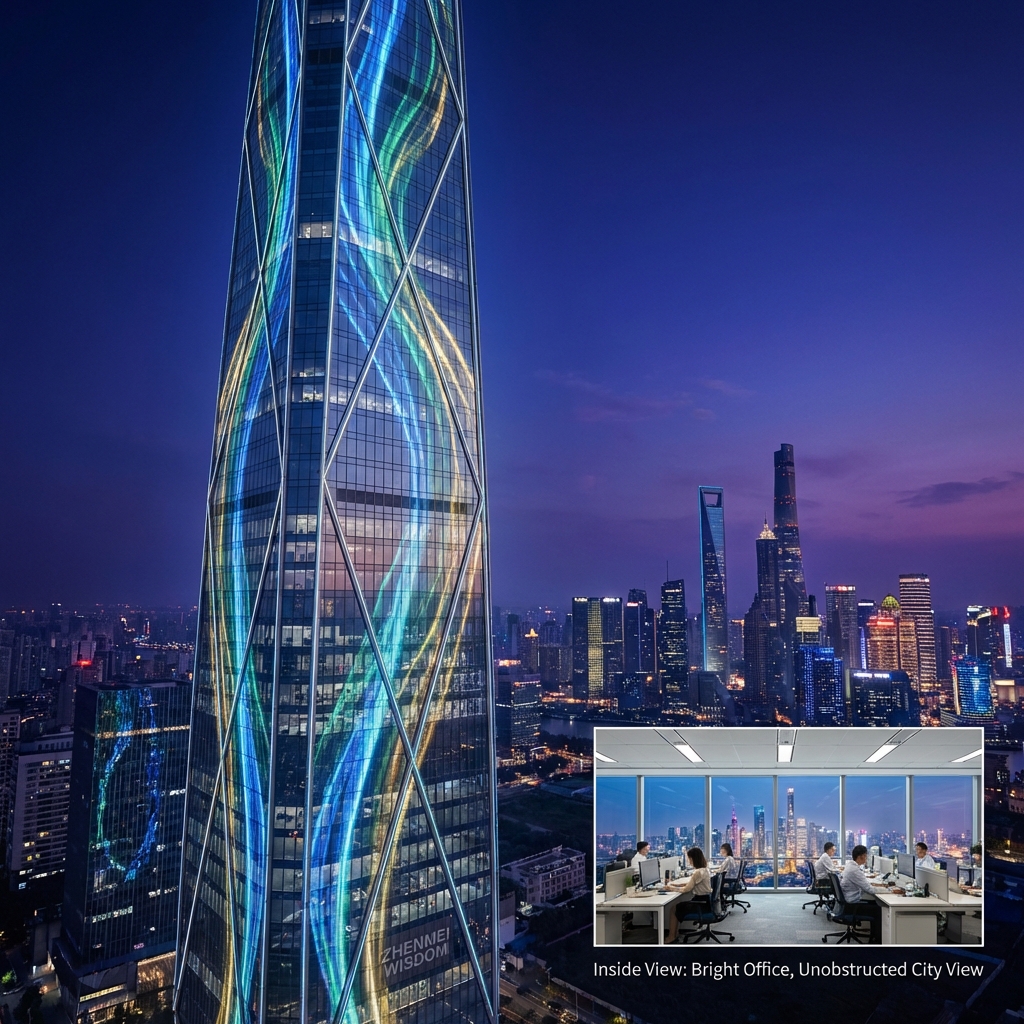
Architectural Feature: The P Series can be integrated as a floating element within a building's design, becoming a centerpiece that showcases dynamic content. Its lightweight and slim profile makes it ideal for suspension, reducing the need for heavy structural modifications.
Space Optimization: By suspending the display, valuable floor space is kept clear, crucial in high-traffic areas or environments where flexibility of layout is key.
Multi-Angle Visibility: Suspended displays often offer 360-degree viewing opportunities (depending on content design and physical setup), maximizing audience reach from different vantage points.
Safety and Durability: Zhenmei Wisdom rigorously tests the P Series for structural integrity under various hoisting conditions. This includes robust connection points, secure cabling management, and materials chosen for long-term stability in suspended applications. Our installation guidelines emphasize secure rigging and adherence to local safety standards, providing peace of mind for complex architectural integrations.
The engineering behind its suspended deployment is robust, ensuring not only visual spectacle but also long-term reliability and compliance with safety regulations. For architects and designers, this opens up new dimensions of digital integration, making buildings themselves speak through light and motion.
The Business Imperative: Calculating ROI, Cost, and Total Ownership of P Series Displays
Investing in a cutting-edge technology like the Zhenmei P Series LED Holographic Screen is a strategic business decision, not merely a procurement one. For our B2B clients, the question isn't just "What does it do?" but fundamentally, "What value does it bring to my business?" This necessitates a clear-eyed look at the financial aspects: initial investment, long-term operational costs, and the ultimate return on that investment. In 2025, with dynamic market conditions and increasing pressure on budgets, a thorough understanding of ROI and Total Cost of Ownership (TCO) is non-negotiable.
Investment vs. Impact: A Comprehensive ROI Framework for Holographic LED Screens
Calculating the cost and ROI of P Series holographic LED display requires moving beyond simple upfront pricing. The "impact" side of the equation can be qualitative (brand enhancement, customer experience) and quantitative (increased foot traffic, sales conversions). Here's a framework:
Direct Revenue Generation:
Increased Sales: Does the captivating display lead to more impulse purchases or higher conversion rates for advertised products? (e.g., A luxury brand sees a 15% uplift in sales of items featured on the P Series screen in a specific period).
Advertising Revenue: If the display is in a public space (e.g., airport, mall), can third-party advertisers pay to use segments of its display time?
Brand Value & Customer Engagement:
Brand Recall/Recognition: How many more people stop, photograph, or engage with the display? (Measured via foot traffic sensors, social media mentions, surveys).
Dwell Time: Does the display increase the time customers spend in a retail environment or exhibition booth, leading to more opportunities for interaction?
Competitive Differentiation: Positioning as an innovator and leader in customer experience.
Operational Efficiencies:
Reduced Printing Costs: Replacing static posters and banners with dynamic digital content eliminates printing, distribution, and installation costs for physical materials.
Timeliness & Flexibility: Rapid deployment of new promotions or emergency information, reducing delays and costs associated with traditional signage.
Energy Efficiency: Modern LED technology, especially transparent screens designed to let ambient light through, can be surprisingly energy-efficient when optimized.
Expert Opinion: "In 2025, businesses aren't just buying screens; they're investing in experiences. The ROI of holographic LED displays often isn't just about direct sales, but about the intangible value of customer delight and brand innovation, which ultimately translates to long-term loyalty and market share." - Dr. Anya Sharma, Digital Signage Consultant.
Navigating Pricing: Factors Influencing Cost Per Square Meter in the 2025 Market
The "cost per square meter" for LED hologram advertising screen technology is influenced by several variables:
Pixel Pitch (P): Generally, the smaller the pixel pitch (higher resolution), the higher the cost per square meter due to increased LED density and manufacturing precision.
Transparency Rate: Higher transparency often involves more advanced substrate materials and intricate manufacturing processes, which can affect price.
Brightness Output: Screens designed for high ambient light environments (e.g., outdoor-facing storefronts) require higher brightness LEDs, impacting cost.
Module Size & Customization: Standard module sizes are typically more cost-effective than highly customized panel dimensions or complex curved designs.
Control System & Software: The sophistication of the CMS and media player, including interactive capabilities, will add to the overall system cost.
Installation Complexity: Specialized hoisting mechanisms, structural reinforcement, and integration with existing architectural elements can significantly affect project pricing.
Volume: Larger orders typically benefit from economies of scale.
While precise figures fluctuate, a general range for high-end transparent LED displays in 2025 might be from $2,000 to $5,000+ per square meter for the screen modules alone, before factoring in control systems, installation, and content creation.
Lifecycle Expectations & Proactive Maintenance Strategies for Maximizing Longevity and Value
The longevity and performance of your P Series display are directly tied to diligent maintenance. A quality LED display can typically offer 100,000 hours of operational life, but this relies on proper care.
Proactive Maintenance:
Regular Cleaning: Dust and grime can accumulate on LED modules, affecting transparency and brightness. A gentle, non-abrasive cleaning regimen is crucial.
Firmware & Software Updates: Keep the control system and CMS updated to benefit from performance improvements, bug fixes, and new features.
Environmental Monitoring: Ensure the display operates within specified temperature and humidity ranges. While Zhenmei P Series is built for durability, extreme conditions can degrade performance over time.
Pixel Monitoring: Regular checks for dead pixels or module failures. Zhenmei Wisdom's modular design allows for easy replacement of individual panels, minimizing downtime and maintenance costs.
Brightness Calibration: Over time, LED brightness can subtly degrade. Periodic calibration ensures consistent color and luminance across the entire display.
Lifecycle Considerations:
Energy Consumption: While modern transparent LEDs are energy-efficient, power usage is proportional to brightness and content displayed. Zhenmei provides detailed power consumption data to help clients plan energy costs.
Repairability: The modular design of the P Series is a significant advantage. Instead of replacing an entire screen, individual modules can be swapped, greatly reducing repair costs and extending the overall system life.
Upgrade Paths: As technology evolves, modular systems allow for easier upgrades of specific components (e.g., control cards) to keep the display current without a full replacement.
Actionable Advice: "Develop a detailed preventative maintenance schedule and budget for your P Series display from day one. Investing in regular care will not only extend the display's lifespan but also ensure consistent, high-impact performance, protecting your initial investment."
Understanding these elements of cost and total ownership empowers B2B decision-makers to justify their investment in Zhenmei P Series, ensuring it’s seen as a value-generating asset rather than just an expense.
Zhenmei P Series vs. The Market: A Competitive Analysis of Advanced Display Solutions
In a rapidly evolving market saturated with various digital signage solutions, distinguishing genuine innovation from mere novelty is crucial. When businesses consider a high-impact visual display, they're faced with a spectrum of choices, from traditional opaque LED walls to various forms of transparent displays. The Zhenmei P Series doesn’t just add to this spectrum; it carves out a distinct position, particularly for its specialized "floating" effect and suspended deployment capabilities. Understanding its competitive advantages against alternatives like conventional transparent LED displays and LED film is essential for making an informed decision in 2025.
Comparative Advantages: P Series Against Traditional Transparent LED Displays and LED Film
Let's break down how the P Series stacks up against its closest cousins:
Vs. Traditional Transparent LED Displays (Panel-based):
What they are: These are typically solid, rigid panels with LEDs arranged on a transparent substrate, offering good transparency and brightness.
P Series Advantage: While traditional transparent panels offer similar transparency, the P Series distinguishes itself with its ultra-slim, lightweight, and three-sided frameless design. This engineering choice directly facilitates the "floating" illusion and vastly improves architectural integration, especially in suspended scenarios. Many standard transparent panels still have a visible frame or are heavier, making seamless integration more challenging. Furthermore, the P Series is specifically optimized for hoisting, addressing structural and aesthetic needs from the ground up, a factor often secondary in generic transparent panels.
Aesthetics: The P Series aims for near-invisibility when not active, allowing the physical environment to dominate. Generic panels, while transparent, can sometimes still feel like a "screen" within the space due to more pronounced frames or thicker profiles.
Vs. Transparent LED Film:
What it is: A flexible, adhesive film embedded with tiny LEDs, designed to be applied directly onto glass surfaces (like windows). It's known for very high transparency and extreme ease of installation (stick-on).
P Series Advantage: While LED film offers convenience and excellent transparency, it typically has a higher pixel pitch (lower resolution) and lower brightness compared to dedicated panel-based solutions like the P Series. This limits its application for highly detailed, high-impact content or in bright ambient light. The "holographic" effect, which relies on a fine pixel pitch and dynamic contrast, is much harder to achieve convincingly with LED film. The P Series delivers a far more immersive and premium visual experience, often with greater color depth and refresh rates, making it suitable for high-end retail, brand experiences, and architectural installations where visual fidelity is paramount.
Durability & Longevity: As a film, it can be more susceptible to physical damage or degradation over time compared to the more robust, modular panel construction of the P Series, especially in high-traffic or exposed environments.
Deployment: LED film is largely restricted to flat glass surfaces. The P Series, by contrast, thrives in LED holographic suspended display configurations and custom integrations, offering greater design freedom.
Essentially, the P Series bridges the gap between the ultra-high transparency of film and the high visual fidelity of traditional LED panels, all while specializing in architectural integration and suspended "floating" effects.
Zhenmei Wisdom's Differentiators: Why P Series Stands Out in 2025's Competitive Landscape
Zhenmei Wisdom isn't just another manufacturer; we've positioned ourselves as specialists in flexible and transparent LED display technology. Our P Series embodies several key differentiators that are critical for discerning B2B clients in 2025:
Purpose-Built for Suspension: Unlike many manufacturers who adapt existing transparent screens for hoisting, the P Series is engineered from the ground up as a high-end "floating" display device. This includes optimized weight distribution, robust connection points, and safety certifications for suspended use cases.
Uncompromised Visual Quality at High Transparency: We've invested heavily in R&D to achieve a leading balance of ultra-fine pixel pitch, exceptional brightness, and class-leading transparency. This synergy is what truly unlocks the convincing "holographic" or floating illusion, delivering visual impact that resonates with discerning audiences.
Modular Flexibility & Seamless Integration: Our emphasis on ultra-slim, lightweight, and frameless modules ensures not just easy installation but also aesthetic integration into complex architectural designs. This means less compromise on design vision and more efficient deployment.
Global Deployment Expertise & Support: Zhenmei Wisdom brings manufacturing expertise and a track record of successful global deployments. We understand the nuances of international projects, from technical specifications to logistics and local regulations, providing comprehensive support that extends beyond just shipping hardware.
Focus on B2B Needs: Our product development is driven by the specific pain points and aspirations of B2B clients – ROI, TCO, ease of maintenance, scalability, and impact. This isn't a consumer product; it's a robust, reliable, and high-performance industrial solution designed for sustained commercial operation.
By delivering a product that is technically superior, aesthetically refined, and strategically aligned with the demands of modern B2B visual communication, the Zhenmei P Series firmly distinguishes itself as a premier choice for those seeking to truly innovate their display experiences.
Deployment & Best Practices: Maximizing Your P Series Investment for Visual Impact
Acquiring a Zhenmei P Series LED Holographic Screen is just the first step. To truly unlock its potential and maximize your investment, meticulous planning and execution in deployment are essential. This isn't a plug-and-play monitor; it's a sophisticated system that interacts with its environment and requires thoughtful consideration from structural integration to content strategy. Getting it right ensures your floating visuals don't just appear, but captivate, engage, and deliver on your business objectives.
From the engineer's blueprint to the marketer's storyboard, every step needs to be harmonized to achieve that breathtaking "holographic" effect and ensure long-term, reliable operation.
Flexible Installation Methods: From Suspended to Integrated Solutions (LED Holographic Suspended Display Installation Guide)
The versatility of the P Series lies in its adaptable installation methods. Our engineering team has designed the system to accommodate a range of scenarios, but each requires specific considerations:
Suspended Installations (Hoisting):
Guidance: This is a specialty of the P Series. Critical here is assessing the structural integrity of the ceiling or overhead support. Consult with a qualified structural engineer to calculate load-bearing capacity. Zhenmei provides detailed weight specifications per module and recommends appropriate rigging hardware (e.g., steel cables, specialized truss systems). Ensure even weight distribution and use redundant safety lines.
Cable Management: Power and data cables must be discreetly routed and secured to maintain the "floating" aesthetic. This often involves custom conduits or cable trays that blend with the ceiling.
Environmental Factors: Consider air currents, potential vibrations, and ambient light sources that might affect stability and visual clarity.
Freestanding/Floor-Mounted Solutions:
Guidance: While the P Series excels in suspension, it can be integrated into custom floor stands or kiosks. Stability is key; the base must be robust enough to support the display's weight and prevent tipping, especially in high-traffic areas.
Safety Barriers: For public spaces, consider perimeter barriers to prevent accidental contact, protecting both the display and the public.
Integrated Architectural Solutions:
Guidance: This involves embedding the P Series directly into architectural elements like glass facades, partition walls, or bespoke structures. Close collaboration with architects and builders from the project's inception is paramount.
Custom Framing: Often, custom aluminum or steel frames are designed to hold the modules in place, providing structural support while minimizing visual intrusion. The P Series' frameless design helps achieve this sleek integration.
Thermal Management: Ensure adequate airflow or passive cooling mechanisms are in place, especially when embedding the display within enclosed structures, to prevent overheating.
Actionable Advice: "Never cut corners on structural assessments for suspended installations. Partner with certified rigging experts and always follow the detailed LED holographic suspended display installation guide provided by Zhenmei Wisdom to ensure safety and optimal performance."
Crafting Compelling Content: Strategies for Engaging 3D Visuals That Resonate with Your Audience
The best hardware is only as good as the content it displays. For the P Series, content strategy is paramount to achieving that truly captivating "holographic" effect.
Embrace Transparency: Design content with significant black or dark areas. These portions become transparent on the screen, allowing the background to show through and enhancing the floating illusion. Avoid dense, full-screen graphics that would defeat the purpose of transparency.
Leverage 3D & Parallax Effects: Think beyond flat 2D videos. Content that incorporates depth cues, slow camera movements around objects, or elements that appear to move "into" or "out of" the screen will maximize the perceived 3D effect.
High Contrast & Vibrant Colors: Since the screen is often competing with ambient light, use bright, highly saturated colors for your primary visual elements. This ensures they stand out and pop, making the floating content more striking.
Simplicity is Key: While dynamic, avoid overly cluttered content. The magic of a holographic display is its elegance. Focus on one or two key messages or product highlights per sequence.
Dynamic Storytelling: Utilize the display's ability to show motion. Short, engaging video clips, animated logos, or flowing textual messages are far more effective than static images. Think about how the content can transition seamlessly, almost as if it's manifesting from thin air.
Contextual Relevance: Tailor content to the specific application. A luxury retail store might use elegant, slow-moving product visualizations, while an exhibition might feature energetic, informative animations.
Test and Refine: Always test your content on the actual P Series display before full deployment. What looks good on a standard monitor might not translate perfectly to a transparent, suspended screen. Pay attention to viewing angles and ambient lighting conditions during testing.
By combining meticulous installation with a thoughtful, creative content strategy, your Zhenmei P Series LED Holographic Screen will not just display visuals, but create truly memorable and impactful experiences for your target B2B audience.
Common Misconceptions and Future Trends in Holographic Display Technology
The term "holographic" often conjures images from science fiction—fully volumetric, interactive projections that exist independently in space. While the Zhenmei P Series LED Holographic Screen delivers an incredibly convincing and effective "floating visual" experience, it's essential for B2B decision-makers to distinguish between realistic capabilities and speculative future technologies. Navigating these nuances is key to setting appropriate expectations and making sound investment decisions. Beyond the present, understanding the trajectory of transparent LED screen development offers insights into future potential and innovation.
Separating Fact from Fiction: Understanding the Nuances of 'Holographic' Displays
The word "holographic" has been widely adopted in marketing to describe various 3D or transparent display technologies. Here's the distinction:
True Holography (Scientific): This involves recording and reconstructing a 3D light field, creating a truly volumetric image that changes perspective as you move around it, often using lasers and interference patterns. This technology, while advancing, is still largely in research labs or limited niche applications, especially for large-scale displays.
"Holographic Effect" (as with P Series): This refers to the illusion of a 3D or floating image created by specialized transparent screens (like the P Series), aided by tailored content. The screens themselves are 2D, but their high transparency and the intelligent design of the displayed content make elements appear to hover, often with convincing depth perception. It's a highly effective and commercially viable form of naked-eye 3D.
Spinning LED Fans (Hologram Fans): These are another type of "holographic" display often seen. They use rapidly spinning LED bars to create persistence-of-vision images that appear to float. While captivating for smaller, specific objects, they are typically limited in size, content complexity, and robustness compared to a modular, large-scale transparent LED screen like the P Series.
The Zhenmei P Series delivers a cutting-edge "holographic effect" that is practical, scalable, and visually stunning for B2B applications, offering a clear advantage over traditional displays without promising unrealistic science fiction.
Addressing Challenges: Environmental Adaptability, Viewing Angles, and Durability Considerations
Even with advanced technology, certain practical considerations are always top-of-mind for industrial applications:
Environmental Adaptability: While Zhenmei P Series screens are designed for robust commercial use, extreme conditions need careful planning. For outdoor deployments, weatherproofing (IP rating) against rain, dust, and temperature fluctuations is crucial. Specific models or enclosures are typically required for prolonged exposure. High ambient light can also wash out content if brightness isn't sufficiently high.
Viewing Angles: Like all LED displays, there can be slight variations in color and brightness when viewed from extreme angles. While modern transparent LEDs offer excellent wide viewing angles (typically 140°–160°), content designers should consider primary viewing corridors to optimize impact. The "floating" illusion itself is best perceived when viewers are relatively head-on.
Durability: The P Series is built with industrial-grade components. However, screens in public spaces are susceptible to accidental impact. Our modular design facilitates easy replacement of damaged panels. Regular maintenance, as discussed, is key to maximizing lifespan and protecting the investment against common wear and tear.
These aren't necessarily limitations but rather engineering and design considerations that a reputable provider like Zhenmei Wisdom actively addresses through product design and comprehensive support.
The Road Ahead: Innovations and Evolutions in Transparent LED Screen Development
The field of transparent LED screen development is far from stagnant. Looking towards the future, several trends are poised to further enhance the capabilities and applications of technologies like the P Series:
Increased Transparency & Finer Pitch: Expect even higher transparency rates (pushing 95-98%) and even finer pixel pitches, allowing for more detailed and less perceptible screen structures. This will make the "floating" effect even more realistic and the screens virtually invisible when inactive.
Enhanced Durability & Flexibility: Research into new, more robust and flexible transparent substrates will open up new form factors and architectural integrations, including truly curved or even rollable transparent screens.
Advanced Interactivity & AI Integration: Future P Series iterations may integrate more sophisticated sensors for advanced touchless interaction, audience analytics powered by AI, and even real-time content generation based on environmental cues or viewer demographics. Imagine a display that adapts its content based on who is looking at it.
Energy Efficiency & Sustainability: Continued advancements in LED technology will lead to even lower power consumption, aligning with global trends towards more sustainable and eco-friendly display solutions.
Micro-LED & Mini-LED Evolution: As Micro-LED and Mini-LED technologies mature and become more cost-effective, they will eventually make their way into transparent displays, offering unprecedented brightness, contrast, and pixel density in a transparent format.
Zhenmei Wisdom is at the forefront of these innovations, continually refining the P Series and exploring next-generation technologies to ensure our clients always have access to the most impactful and future-proof display solutions.
FAQs (Frequently Asked Questions) About Zhenmei P Series LED Holographic Screens
Can P Series LED holographic screens be effectively used outdoors in various weather conditions?
Yes, Zhenmei P Series LED holographic screens can be adapted for outdoor use, but it requires specific configurations. For outdoor deployments, screens typically need higher brightness to combat direct sunlight, and robust IP (Ingress Protection) ratings to protect against rain, dust, and extreme temperatures. While the transparent effect is maintained, considerations for environmental sealing and structural robustness for wind loads are paramount. It's crucial to specify outdoor use during the consultation phase so that the appropriate, weather-resistant version of the P Series can be supplied and installed.
How does pixel pitch specifically influence the display quality and perceived depth for holographic effects?
Pixel pitch is absolutely critical for the perceived depth and overall quality of holographic effects. A smaller pixel pitch (e.g., P2.8 vs P5) means the LED diodes are packed more densely. This higher pixel density allows for finer detail, smoother lines, and more realistic rendering of 3D objects. For a holographic effect, where content appears to float, a small pixel pitch is essential for making the individual light points blend seamlessly, creating a solid, convincing image rather than a pixelated grid. The smaller the pitch, the closer viewers can be without seeing individual pixels, thus enhancing the illusion of depth and realism.
Are Zhenmei's holographic LED displays scalable for large-scale architectural or experiential projects?
Absolutely. Zhenmei's P Series is designed with modularity at its core. Individual panels can be seamlessly connected to create large-format displays of virtually any size and shape. This modular architecture not only allows for immense scalability, from small retail window installations to expansive building facades or atrium displays, but also simplifies logistics, installation, and maintenance. Our engineering team works closely with clients and architects to plan and execute custom, large-scale projects, ensuring structural integrity and visual continuity across the entire display.
What are the key power consumption considerations and energy efficiency features of transparent LED technology?
Power consumption for transparent LED displays, including the P Series, varies based on brightness settings, content displayed (brighter, more vibrant content uses more power), and overall screen size. However, modern transparent LED technology is increasingly energy-efficient due to advancements in LED diode technology. Furthermore, the inherent transparency means that parts of the screen are 'off' (transparent) when displaying dark content, which can reduce overall power draw compared to an opaque screen showing a full-black image. Zhenmei Wisdom provides detailed power consumption specifications for each P Series configuration, aiding in energy planning and cost management for B2B projects.
What content management system (CMS) is recommended or integrated with the P Series for dynamic content updates?
Zhenmei P Series displays are compatible with a range of industry-leading content management systems (CMS) and media players. While we can recommend specific platforms based on project complexity, desired features (e.g., interactivity, real-time analytics), and client-side existing infrastructure, our systems are typically open to integration with popular third-party CMS solutions. This ensures flexibility for dynamic content updates, scheduling, remote management, and multi-zone playback, allowing clients to choose the system that best fits their operational workflow. We provide comprehensive technical documentation and support for seamless CMS integration.
What is the typical lead time for a custom P Series project, including design, manufacturing, and installation?
The lead time for a custom Zhenmei P Series project can vary significantly depending on the project's scale, customization requirements, and current manufacturing queue. Generally, for a standard custom project, clients can expect a lead time of approximately 4 to 8 weeks for manufacturing and quality control after final design approval. Shipping time will be additional, based on destination and method. Installation time varies greatly by complexity and site readiness, often ranging from a few days to several weeks. It's essential to discuss your project timeline early with our sales and engineering teams to get a precise estimate tailored to your specific needs.
Empowering Future-Forward B2B Experiences with Zhenmei P Series LED Holographic Screens
The digital signage landscape is no longer about simply displaying static information; it's about crafting immersive, memorable experiences that resonate deeply with audiences. The Zhenmei P Series LED Holographic Screen stands as a testament to this evolution, offering B2B enterprises a sophisticated tool to break through the noise and redefine visual engagement. We've explored its intricate technical underpinnings, from the critical balance of pixel pitch and transparency to its ultra-slim, lightweight design engineered for seamless suspension and architectural integration.
Beyond the technological marvel, the P Series delivers tangible business value. It redefines storefront aesthetics, elevates brand presence in exhibitions and luxury spaces, and opens new avenues for dynamic architectural expression. We’ve dissected the vital considerations of ROI and Total Cost of Ownership, emphasizing that investment in the P Series is an investment in unparalleled impact and long-term brand equity. Zhenmei Wisdom prides itself on not just manufacturing cutting-edge displays, but providing comprehensive solutions that anticipate and address the real-world needs of B2B clients, from meticulous installation guides to robust maintenance protocols.
In a competitive market, the P Series distinguishes itself by offering a truly "floating" visual experience that far surpasses conventional transparent screens or LED films in visual fidelity and deployment flexibility. As we look towards 2025 and beyond, the ongoing innovations in transparent LED technology promise even more breathtaking possibilities. For businesses ready to transcend traditional display limitations and embrace a future where digital content seamlessly blends with physical spaces, the Zhenmei P Series isn't just a product—it's a strategic pathway to captivating your audience and leaving an indelible impression.
Ready to transform your commercial space with visuals that truly float? Discover the full potential of the 【LED Holographic Screen P Series】 and explore custom solutions tailored for your next project.