After spending years in the display industry and watching countless technologies come and go, I've seen how confusing new terms can be. When Mini LED first appeared, many people, including some of my colleagues, wondered if it was just another marketing buzzword. But after testing and working with these displays, it's clear: Mini LED is a game-changer. It bridges the gap between traditional LCDs and high-end OLEDs, offering a stunning visual upgrade that you can genuinely see and feel. Let's explore what makes this technology so special.
Understanding Mini LED Screens at a Glance
- What is a mini LED screen? A mini LED screen is an advanced type of LCD display. It uses thousands of miniaturized LEDs (light-emitting diodes) in its backlight, far more than a standard LED TV.
- How does it improve picture quality? These tiny LEDs are grouped into hundreds or thousands of "local dimming zones." These zones can be individually brightened or dimmed. This precision control creates deeper blacks and brighter highlights.
- Is mini LED better than LCD? Yes, significantly. It provides much better contrast, brightness, and color accuracy than a traditional LCD/LED screen.
- What are the main advantages? The primary benefits are superior contrast, incredible peak brightness for HDR content, improved energy efficiency, and a longer lifespan without the risk of burn-in seen in OLEDs.
- Is it good for gaming? Absolutely. The high brightness, deep contrast, and fast response times make mini LED monitors a top choice for gamers seeking an immersive experience.
- What is the difference between Mini LED and Micro LED? Mini LEDs are tiny backlights for an LCD panel. Micro LEDs are even smaller and create the image directly, like OLED, without needing a backlight or LCD layer. Micro LED is a more advanced and currently much more expensive technology.
What is a Mini LED Display? An Introduction to the Technology
Mini LED technology might sound complex, but the idea behind it is quite simple: make the lights smaller to gain more control. For years, we've used LED backlights in our TVs and monitors. Mini LED takes that concept and shrinks the individual LED light sources down to a microscopic size—around 0.2 millimeters. This evolution marks a significant step forward in how displays are illuminated, directly impacting everything you see on screen. It’s not a whole new type of screen, but a massive upgrade to the engine that powers it.
Defining the Core Concept: From Traditional LED to Mini LED
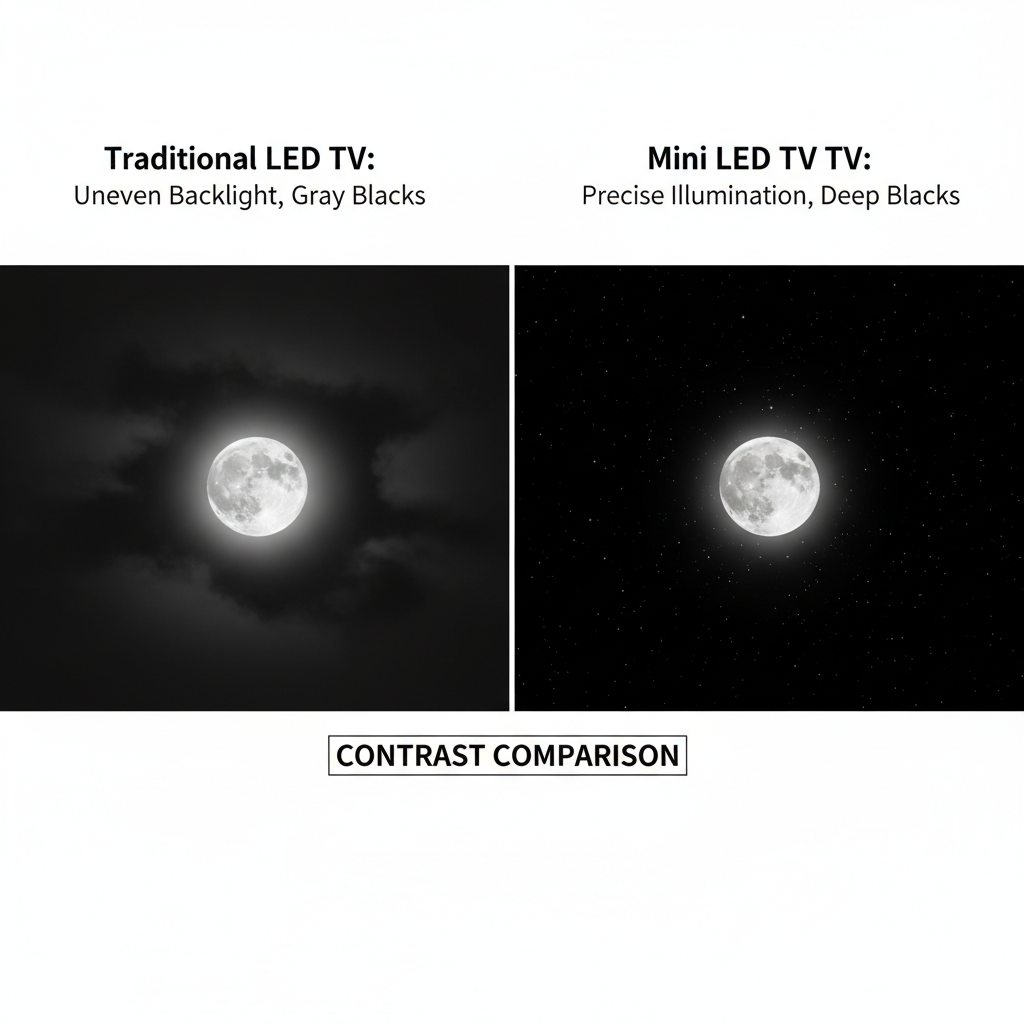
Think of a traditional LED TV's backlight as a few large lightbulbs trying to illuminate a giant room. You get light, but it’s hard to control specific areas. Now, imagine replacing those big bulbs with thousands of tiny, dimmable spotlights. That's the leap from conventional LED to Mini LED. By using thousands of these smaller LEDs, manufacturers can create many more "local dimming zones." This allows the screen to make a small part of the image intensely bright while keeping the adjacent part completely dark, something older technologies struggled with.
The Role of Miniaturization in Modern Display Advancement
Why is smaller better? Miniaturization is the key to precision. Having more, smaller light sources gives the display's processor pinpoint control over the image's light and shadow. This results in a picture with a dynamic range that feels more lifelike. Bright scenes in a movie pop with dazzling intensity, while dark, shadowy scenes retain rich detail without looking washed out or gray. This level of control was previously only achievable with more expensive technologies like OLED.
Key Characteristics of a Mini LED Display System
A Mini LED system isn't just about the tiny lights. It's a combination of several key components working together:
- A dense array of mini LEDs: Thousands to tens of thousands of LEDs packed behind the LCD panel.
- A high number of local dimming zones: These zones can range from a few hundred to several thousand, depending on the model.
- An advanced processor: A powerful chip is needed to manage all these zones in real-time, dimming and brightening them in sync with the on-screen action.
- A Quantum Dot layer: Most Mini LED screens also include a quantum dot film to enhance color volume and accuracy, delivering a wider and more vibrant palette.
How a Mini LED Panel Works: A Technical Breakdown
Getting into the nitty-gritty, a Mini LED panel operates on a principle of refined control. Unlike a standard LCD where the backlight is either on, off, or uniformly dimmed, a Mini LED backlight is a dynamic grid of light. It intelligently adjusts itself frame by frame to perfectly match the image being displayed on the LCD layer in front of it. This process is what creates the stunning contrast and vibrant colors that make Mini LED screens so popular.
The Anatomy of a Mini LED Backlight Unit (BLU)
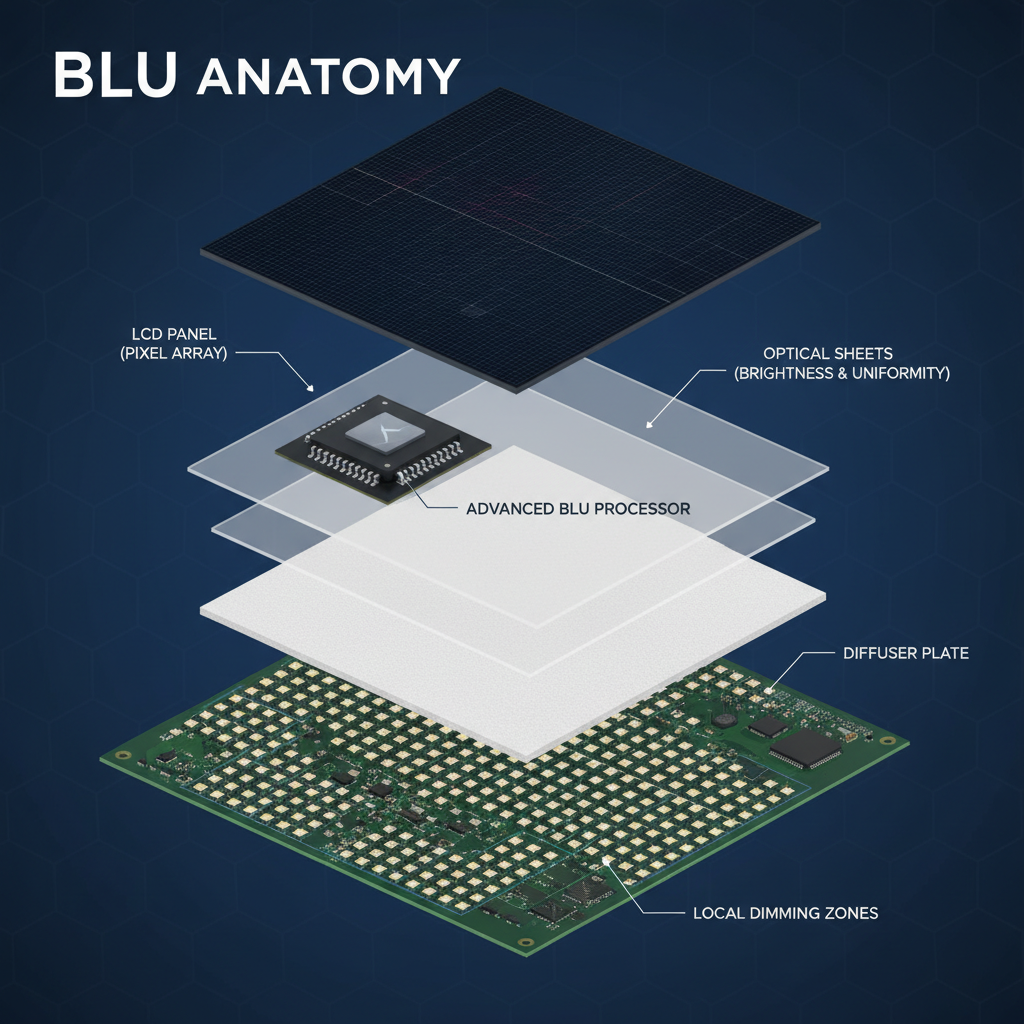
The backlight unit (BLU) is the heart of a Mini LED screen. It consists of a printed circuit board (PCB) where tens of thousands of miniature LEDs are mounted. These LEDs are then covered by a series of diffusers and optical sheets that spread the light evenly before it hits the Liquid Crystal Display (LCD) panel. The LCD panel itself is what forms the colors and shapes you see, but the Mini LED backlight is what gives those colors their power and depth by controlling the light behind them with incredible precision.
Understanding Local Dimming Zones and Their Impact on Contrast
Local dimming zones are the secret sauce of Mini LED. Imagine a scene with a bright moon in a pitch-black sky. On a traditional LED TV, the entire backlight would be on, making the "black" sky look more like a dark gray. With Mini LED, the thousands of dimming zones behind the moon would light up to full brightness, while the zones behind the sky would turn completely off. This ability to control light at a hyper-local level creates a massive jump in the contrast ratio, resulting in true, deep blacks right next to brilliant highlights.
According to data from Market Research Future, Mini LED displays are projected to capture a 40% market share in consumer electronics by 2025, largely due to their superior contrast and brightness capabilities.
The Gallium Nitride (GaN) Material Used in Mini LEDs
Many of these tiny, powerful LEDs are made using a material called Gallium Nitride (GaN). GaN is a semiconductor material that is incredibly efficient at producing bright light in a very small package. It's also more energy-efficient and generates less heat than traditional materials. This allows manufacturers to pack more LEDs into a smaller space without the risk of overheating, making GaN a critical enabler of Mini LED technology and helping to create thinner, more efficient display designs.
Mini LED vs. LCD vs. LED: What's the Real Difference?
It’s easy to get lost in the alphabet soup of display terminology. Let's clear things up. When people say "LED TV," they are usually talking about an LCD TV that uses LEDs as its backlight. Mini LED is also a type of LCD TV, but it uses a far more advanced backlighting system. The core difference isn't the screen itself, but the way it's lit up from behind.
Backlight Technology: The Fundamental Differentiator
Here’s a simple breakdown of the backlight evolution:
- CCFL LCD: The oldest of the bunch, using cold-cathode fluorescent lamps (like small fluorescent tubes) as a backlight. They are bulky and inefficient.
- Edge-Lit LED/LCD: LEDs are placed along the edges of the screen. This allows for thin designs but offers poor contrast, as the entire screen is lit unevenly.
- Full-Array LED/LCD: LEDs are placed in a grid directly behind the screen, offering better brightness uniformity and some local dimming capabilities, but with a limited number of zones.
- Mini LED: Thousands of tiny LEDs are placed behind the screen, creating hundreds or thousands of local dimming zones for precise light control. This is the pinnacle of LCD backlight technology today.
| Feature | Standard LED/LCD | Mini LED |
|---|---|---|
| Backlight Source | Hundreds of larger LEDs | Thousands of smaller LEDs |
| Local Dimming Zones | Few to none (edge-lit) or dozens (full-array) | Hundreds to thousands |
| Contrast Ratio | Good | Excellent |
| Peak Brightness | Moderate to high | Very high |
| Black Levels | Grayish-black | Deep, near-OLED black |
| HDR Performance | Decent | Outstanding |
Comparing Contrast Ratios and Black Levels
The ability to create deep, inky blacks is the holy grail of display technology. Because Mini LED screens can turn off the backlight in specific areas of the image, they can achieve black levels that are dramatically better than any standard LED/LCD. While an OLED pixel can turn off completely for perfect black, Mini LED gets incredibly close. This high contrast ratio makes the entire image appear more three-dimensional and realistic.
Brightness and HDR Performance Across Technologies
High Dynamic Range (HDR) content requires a screen that can get extremely bright to show specular highlights—like the glint of sunlight off a car or a bright explosion. This is where Mini LED truly shines, often reaching peak brightness levels that even OLEDs can struggle to match. This capability makes Mini LED displays fantastic for watching HDR movies and playing HDR games, as they can reproduce these bright effects without sacrificing the dark parts of the scene.
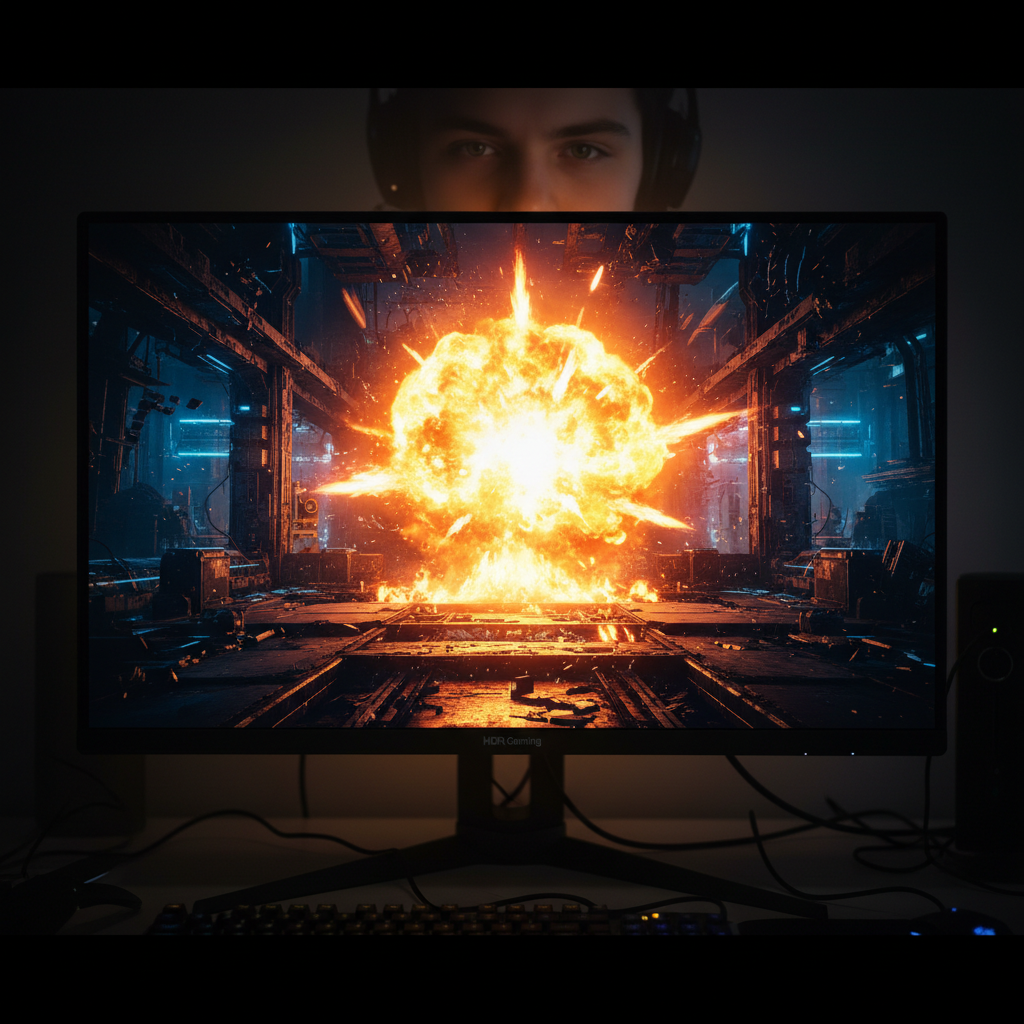
One of the biggest advantages of Mini LED is its ability to push brightness to extreme levels without the risk of burn-in. This makes it a more durable choice for static content, like a computer desktop or a game's heads-up display.
Key Benefits of Mini LED Technology
The move to Mini LED isn't just an incremental update; it brings a host of tangible benefits that elevate the viewing experience. From watching movies to professional creative work, the improvements in picture quality are immediately noticeable. It combines the best aspects of LCD technology (brightness, longevity) with some of the most desirable traits of OLED (contrast, black levels), creating a powerful and versatile display solution.
Superior Picture Quality: Achieving Deeper Blacks and Brighter Highlights
The core advantage of Mini LED is its stunning picture quality. The combination of thousands of local dimming zones and high-efficiency LEDs allows for a level of contrast that was previously impossible on an LCD screen. Dark scenes in films are rendered with rich detail and true black tones, while bright scenes are delivered with breathtaking intensity. This creates a more immersive and lifelike image, whether you're watching a blockbuster movie or editing high-resolution photos.
How Mini LED Screens Improve Display Quality for HDR Content
HDR content is all about expanding the range between the darkest and brightest parts of an image. Mini LED technology is perfectly suited for this. Its ability to hit very high peak brightness levels means that HDR highlights are rendered with spectacular impact. Think of a sunset—a Mini LED screen can show the brilliant, searing glow of the sun while simultaneously keeping the deepening shadows in the landscape detailed and dark. This makes for a dramatically more realistic and engaging viewing experience.
Benefits for Energy Efficiency Compared to Traditional Displays
You might think that thousands of LEDs would use more power, but the opposite is often true. Mini LED screens can be more energy-efficient than their traditional counterparts. Because the dimming zones can be turned off completely in dark areas of the image, the display only uses power where it's needed. In contrast, an older edge-lit LCD keeps the entire backlight running at all times. This intelligent power usage can lead to lower electricity bills and is a step forward in creating more sustainable electronics.
Primary Applications and Use Cases for Mini LED Screens
The versatility of Mini LED technology has allowed it to quickly find a home in a wide range of consumer electronics. Its unique combination of brightness, contrast, and durability makes it an ideal choice for everything from massive home theater TVs to ultra-portable laptops. As a company that pioneers advanced display solutions like flexible and transparent screens, we at Zhenmei Wisdom recognize the immense potential of Mini LED in shaping the future of visual interfaces.
Mini LED TVs: The Next Step for Home Entertainment
In the world of televisions, Mini LED is the new premium standard. It offers a significant upgrade over traditional LED TVs and presents a compelling alternative to OLED. For movie lovers, the exceptional contrast and HDR performance bring a cinematic quality to the living room.
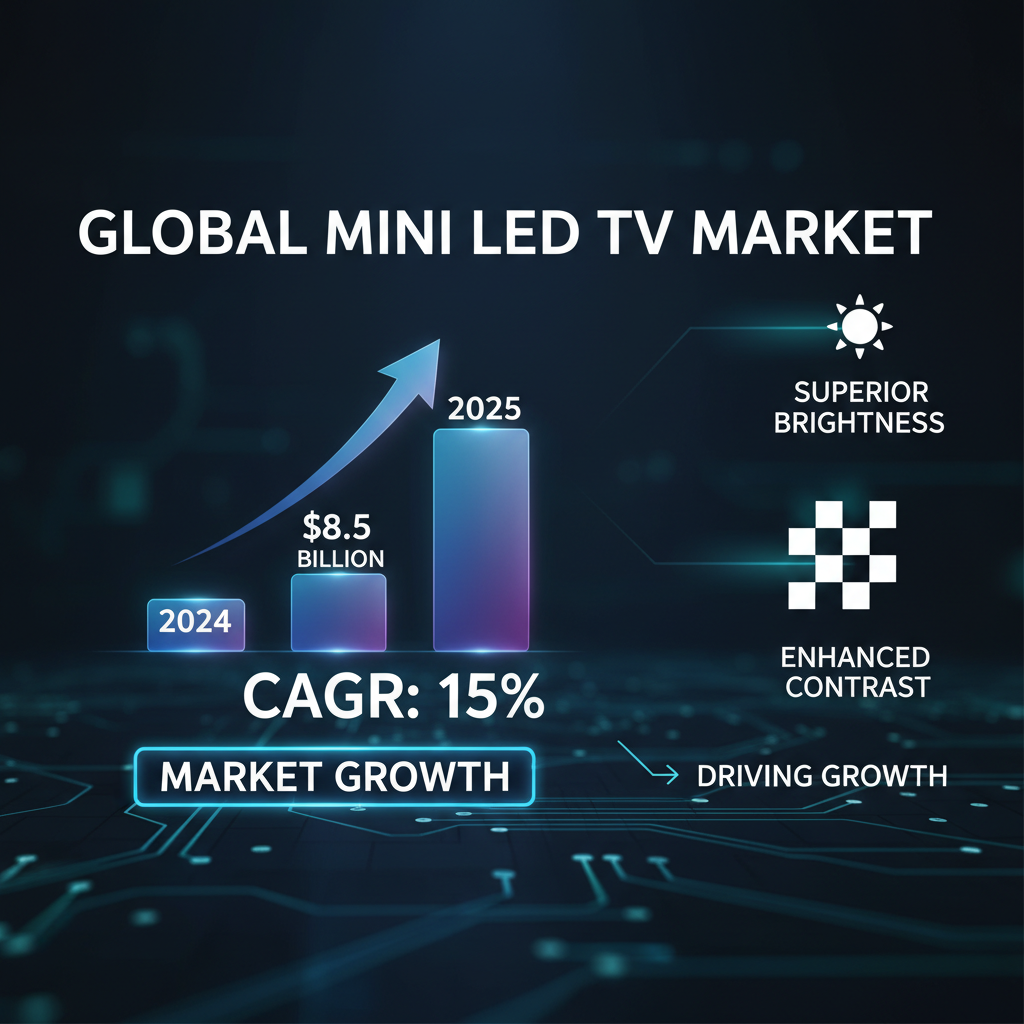
Data from Statista projects the global Mini LED TV market to reach $8.5 billion in 2024, with a projected compound annual growth rate (CAGR) of 15% through 2025, highlighting its rapid adoption in home entertainment.
Why Mini LED Monitors are Ideal for Gamers and Professionals
For PC users, Mini LED monitors have been a revelation.
- For Gamers: The technology's high refresh rates, fast response times, and incredible brightness make for a super-responsive and immersive gaming experience. HDR games, in particular, look spectacular.
- For Professionals: Content creators like video editors and graphic designers benefit from the outstanding color accuracy and high contrast ratio. The ability to see deep blacks and precise highlights is crucial for color grading and photo editing, ensuring their work looks perfect.
The Role of Mini LED Technology in Thin and Portable Displays (Laptops, Tablets)
The compact and efficient nature of Mini LEDs makes them perfect for devices where space and battery life are critical. High-end laptops and tablets are increasingly adopting Mini LED screens to provide premium, HDR-capable displays without adding significant bulk or draining the battery. This allows users to enjoy a top-tier viewing experience on the go, whether they're watching movies on a flight or doing creative work at a café.
Are Mini LED Screens Worth the Investment? A Look at the Pros and Cons
While Mini LED technology offers a fantastic viewing experience, it's important to weigh its advantages against its drawbacks to decide if it's the right choice for you. It currently sits in a premium market segment, positioned between traditional full-array LED screens and OLEDs, offering a unique balance of performance and value. The decision ultimately comes down to your specific needs, budget, and what you prioritize in a display.
Pros: Unmatched Contrast, High Brightness, and Longevity
The advantages of Mini LED are compelling and address many of the limitations of older LCD technologies.
- Exceptional Contrast: By offering precise control over hundreds or thousands of dimming zones, Mini LED displays deliver deep, rich blacks that are second only to OLED.
- Incredible Brightness: They can achieve very high levels of peak brightness, making them ideal for viewing HDR content and for use in brightly lit rooms where other screens might look washed out.
- Long Lifespan & No Burn-In: Since Mini LED still uses an LCD panel with inorganic LEDs, it is not susceptible to the permanent image retention, or "burn-in," that can affect OLED screens over time. This makes it a more durable choice for activities with static elements, like PC use and gaming.
Cons: Potential for 'Blooming' and Higher Initial Cost
No technology is perfect, and Mini LED has a few trade-offs. The most commonly cited issue is "blooming" or the "halo effect." This happens when light from a bright object on a dark background "leaks" into the surrounding black areas, creating a faint glow. Because even thousands of dimming zones are still larger than individual pixels, this can be noticeable in very high-contrast scenes. Additionally, Mini LED screens are currently more expensive to manufacture than traditional LED displays, which is reflected in their higher retail price.
How Mini LED Monitors Compare to OLED in Performance and Lifespan
The choice between Mini LED and OLED often comes down to personal preference and use case.
- OLED: Offers perfect per-pixel contrast (infinite contrast ratio) and a slightly better response time. However, it has a lower peak brightness and carries a risk of burn-in over its lifespan.
- Mini LED: Offers much higher peak brightness, a longer lifespan with no risk of burn-in, and is generally more affordable for larger screen sizes. Its contrast is excellent, though not quite at the per-pixel level of OLED.
For mixed-use scenarios that include gaming, productivity, and media consumption, many experts argue that Mini LED provides the best all-around balance of performance, durability, and value in 2025.
Frequently Asked Questions About Mini LED Technology
As with any new technology, there are a lot of questions. Here are answers to some of the most common ones we hear.
What is the difference between a mini LED and a micro LED?
This is a key distinction. Mini LEDs are tiny backlights used to illuminate an LCD panel. Micro LEDs are even smaller, self-emissive pixels that create the image directly, like OLED. Each Micro LED is its own light and color source. Micro LED is considered the "next big thing" in display tech but is currently extremely expensive and mostly found in large commercial displays.
Can mini LED screens suffer from burn-in like OLEDs?
No. Burn-in, or permanent image retention, is a phenomenon associated with organic materials used in OLED displays. Since Mini LED technology uses inorganic Gallium Nitride (GaN) LEDs for its backlight and a traditional LCD panel, it is not susceptible to burn-in. This makes it a safer long-term investment, especially for use as a computer monitor where static elements like taskbars and icons are always present.
How does mini LED technology enhance gaming performance?
Mini LED enhances gaming in several ways. The extremely high peak brightness makes HDR games look incredibly vibrant and realistic. The deep blacks and high contrast ratio add depth and immersion to dark, atmospheric games. Finally, many Mini LED monitors are designed for gaming with high refresh rates (144Hz and above) and fast pixel response times, ensuring a smooth and blur-free experience in fast-paced action.
The Bright Future of Mini LED Displays
Mini LED isn't just a fleeting trend; it represents a significant and meaningful leap forward in display technology. By shrinking the backlight and multiplying the control zones, it has successfully bridged the gap between traditional LCD and premium OLED, delivering exceptional performance that enhances everything from home entertainment to professional creative work.
Recap: Why Mini LED is a Significant Leap in Display Technology
To put it simply, Mini LED technology has redefined what we can expect from an LCD screen. It brings near-OLED level black performance, industry-leading brightness for spectacular HDR, and the proven durability and longevity of LCD technology. It solves many of the historical weaknesses of LCDs while avoiding the primary drawbacks of OLEDs, creating a powerful, well-rounded solution for nearly any application.
Final Thoughts on Its Impact Across Consumer Electronics
As manufacturing costs continue to decrease, expect to see Mini LED technology become the new standard in premium TVs, monitors, laptops, and tablets. Its ability to deliver a high-end visual experience without the compromises of other technologies ensures its place in the market for years to come. At companies like Zhenmei Wisdom, which are dedicated to pushing the boundaries of screen technology, we see Mini LED as a foundational step toward an even brighter and more dynamic visual future.
References
- Statista (2024). Global Mini LED TV Market Size and Growth Projections.
- Market Research Future (2024). Consumer Electronics Display Market Share Analysis.
- Various technical papers on the application of Gallium Nitride (GaN) in LED manufacturing and display efficiency.