I've spent over eight years helping businesses choose the right LED displays for their advertising needs. Nothing frustrates me more than watching a client invest thousands in a screen that washes out in sunlight or breaks down after the first rainstorm. That's why I'm sharing everything you need to know before buying an outdoor LED advertising screen in 2026.
The outdoor advertising market is booming—global spend hit $46.2 billion in 2024 and is forecast to reach $49.8 billion in 2025. More importantly, digital out-of-home (DOOH) advertising now accounts for 41% of all outdoor ad spend, meaning your competitors are already investing in LED screens. Let me show you how to make a smart choice.
Top Questions About Outdoor LED Advertising Screens
Before we dive deep, here are the answers to the questions I hear most often:
What brightness do I need for outdoor advertising?
Most outdoor LED screens need at least 5,000 nits for daylight visibility. Anything less and your ads will look washed out during sunny afternoons. At night, you should dim to around 100–150 nits to avoid glare and complaints.
How much does an outdoor LED screen cost per square meter?
Expect to pay $400–$1,200 per m² depending on pixel pitch, brightness, and IP rating. But that's just the screen—you'll also need to budget for steel structure, installation, power, and control systems.
What does IP65 mean?
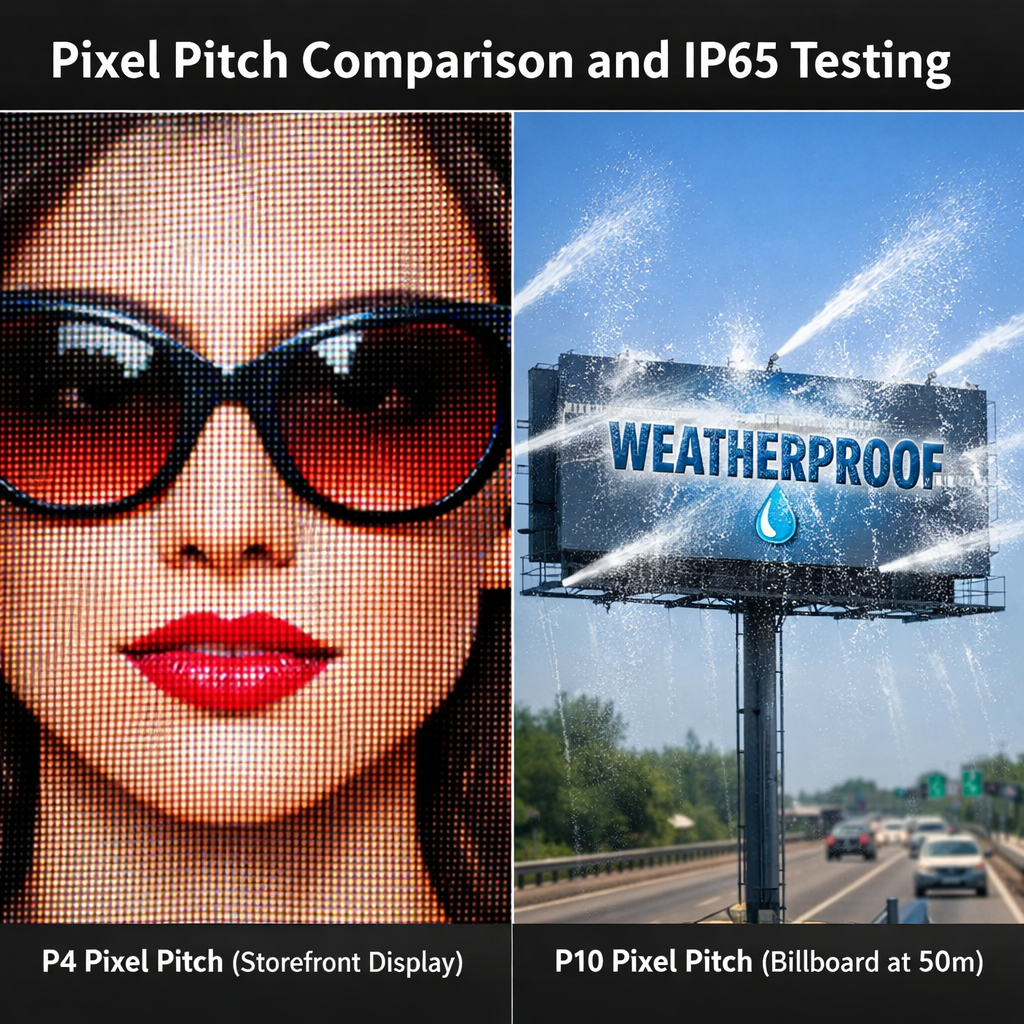
IP65 means the screen is dust-tight (the "6") and protected against water jets from any direction (the "5"). It's the baseline for most outdoor installations, though harsher environments might need IP66.
Which pixel pitch should I choose?
It depends on viewing distance. For highway billboards (viewed from 50+ meters), P8 or P10 works fine. For storefronts or pedestrian areas (10–30 meters), go with P4 to P6.
How much power does an outdoor LED screen consume?
Outdoor screens typically use 300–600 W/m², compared to 150–300 W/m² for indoor displays. Your exact consumption depends on brightness settings and content type.
Are 3D outdoor LED screens worth it?
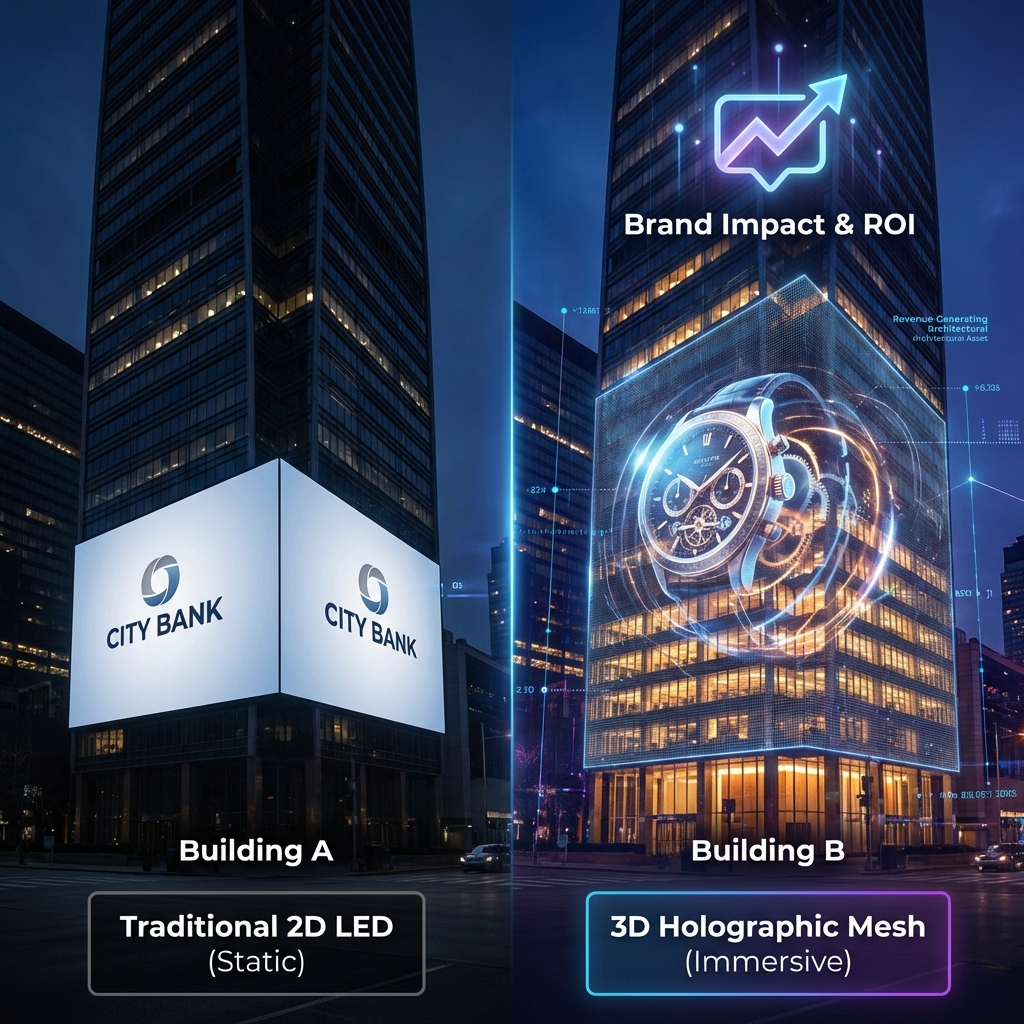
Only if you're in a high-traffic urban location with a big budget. 3D screens need curved or corner structures and specialized content production, which can double your costs.
What's the typical lifespan?
A quality outdoor LED screen should last 80,000–100,000 hours (about 9–11 years of 24/7 operation) before brightness drops to 70% of original output.
Do I need permits for outdoor LED advertising?
Almost always, yes. Check your local regulations for brightness limits, installation permits, and content restrictions before you buy.
What Is an Outdoor LED Display Screen for Advertising?
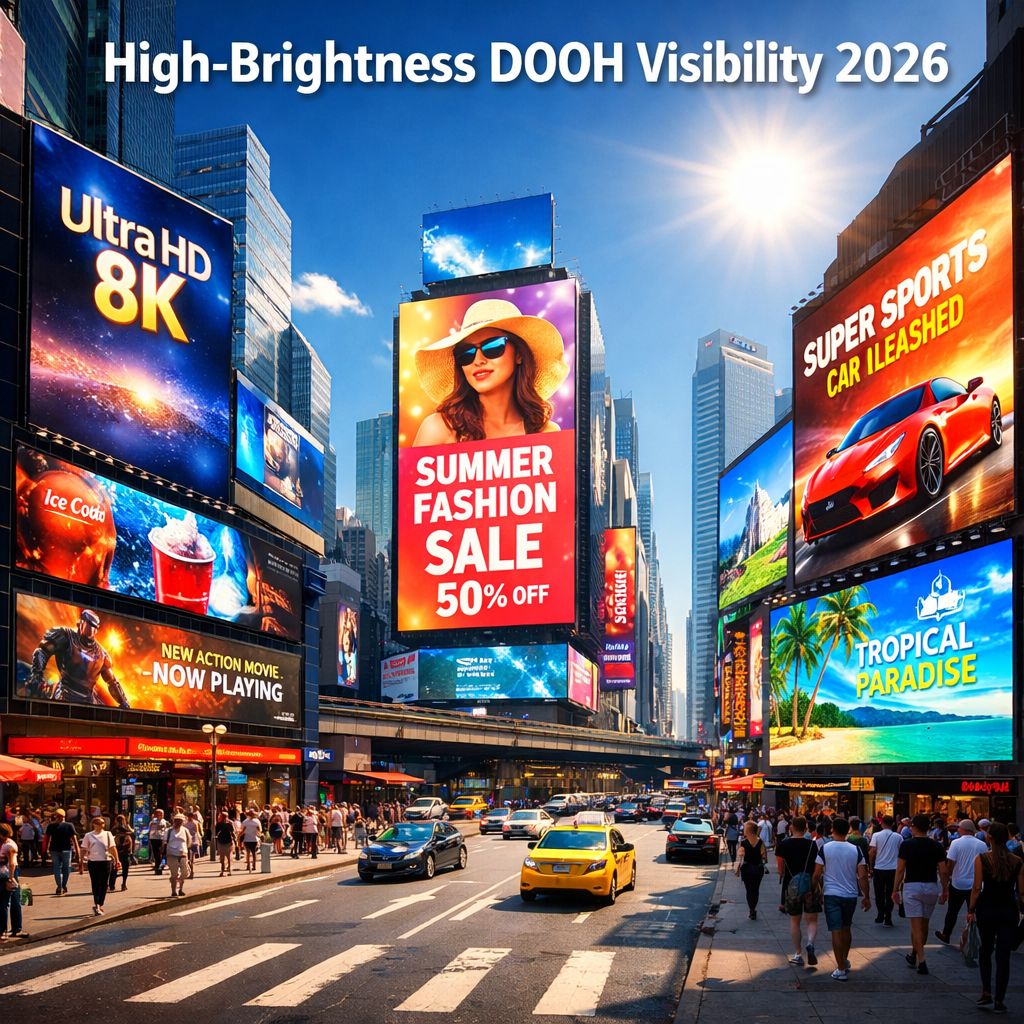
An outdoor LED advertising screen is a digital billboard that uses thousands of tiny light-emitting diodes to display video, images, and text. Unlike traditional printed billboards, you can change your content remotely—multiple times per day if you want.
How Outdoor LED Advertising Screens Differ From Indoor Displays
The main difference is environmental protection. Outdoor screens must survive rain, dust, extreme temperatures, and direct sunlight. That means:
- Higher brightness: 5,000+ nits vs 500–1,000 nits for indoor screens
- Weatherproof enclosures: IP65 or IP66 rating vs no special protection indoors
- Wider temperature range: -40°C to +60°C operation vs typical 0°C to +40°C
- Stronger cabinets: Die-cast aluminum or heavy steel vs lightweight frames
Indoor screens prioritize resolution and viewing angles. Outdoor screens prioritize visibility and durability.
Core Components: LED Modules, Driver ICs, Power Supply, and Control Systems
Every outdoor LED screen has four key parts:
- LED modules – The actual display panels, each containing hundreds of LED lamp beads
- Driver ICs – Control brightness, color, and refresh rate for each pixel
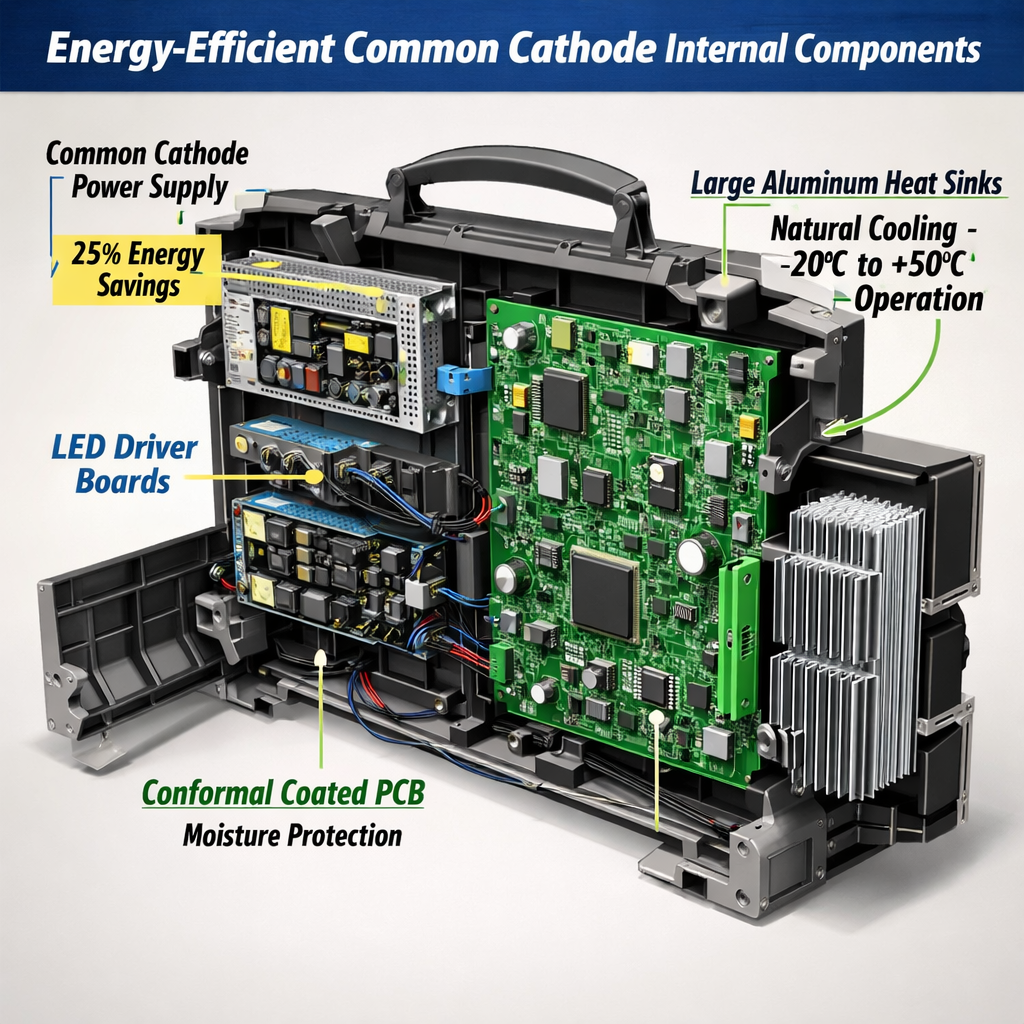
- Power supply – Converts AC to DC and distributes it to modules (common cathode designs save up to 25% energy)
- Control system – Receives your content and tells each module what to display
Quality components make the difference between a screen that lasts 10 years and one that fails after two.
Why DOOH (Digital Out-of-Home) Advertising Is Driving Demand in 2026
The global digital out-of-home advertising market reached $20.74 billion in 2024 and is projected to hit $39.12 billion by 2030, growing at 10.7% annually.
Advertisers love DOOH because you can:
- Change content instantly based on time of day, weather, or audience
- Sell multiple ad slots on one screen instead of one static billboard
- Track impressions with integrated cameras and analytics
- Run programmatic campaigns that bid for ad space in real-time
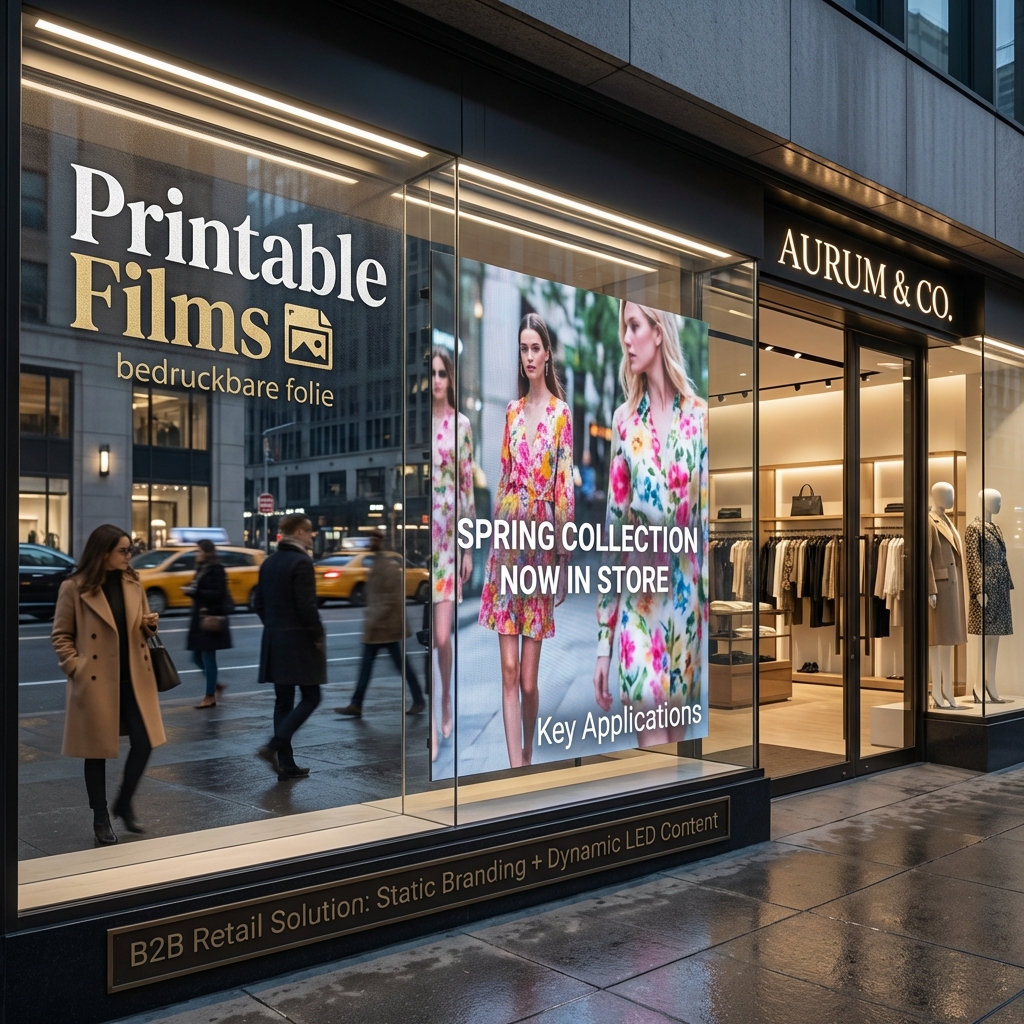
For architectural facades and creative installations, transparent and irregular LED screens offer even more design flexibility.
2026 Technical Specification Checklist for Outdoor Advertising LED Screens
Let me walk you through the specs that actually matter.
Brightness (Nits): Why 5,000 Nits Is the Baseline for Direct Sunlight Visibility
Brightness determines whether people can see your ads during the day. Here's what you need to know:
| Lighting Condition | Recommended Brightness | Why |
|---|---|---|
| Full direct sunlight | 5,000–8,000 nits | Compete with bright ambient light |
| Partial shade / cloudy | 3,000–5,000 nits | Adequate visibility |
| Night operation | 100–150 nits (dimmed) | Prevent glare, save power, comply with regulations |
Many suppliers claim "10,000 nits maximum" but only deliver 3,000 nits in real-world conditions. Always ask for brightness at 50% duty cycle, not peak white—that's closer to actual performance.
Outdoor screens with automatic brightness sensors can reduce power consumption by 30–40% while maintaining perfect visibility throughout the day.
IP Rating Explained: IP65 vs IP66 for Dust and Water Resistance
IP ratings follow the IEC 60529 international standard. The two digits tell you:
- First digit (dust protection): 0 = none, 6 = dust-tight
- Second digit (water protection): 0 = none, 5 = water jets, 6 = powerful water jets
IP65 is standard for most outdoor LED screens. It handles rain, dust, and normal weather.
IP66 is better if your screen will face:
- High-pressure washing
- Coastal salt spray
- Heavy industrial dust
- Extreme storm conditions
Don't pay extra for IP66 if you're installing in a typical urban environment. IP65 is enough.
Pixel Pitch (P3–P10) and Viewing Distance: How to Match Screen Resolution to Installation Location
Pixel pitch is the distance (in millimeters) between the centers of two adjacent pixels. Smaller pitch = higher resolution = more expensive.
Here's a simple formula: Optimal viewing distance (meters) = pixel pitch (mm) × 1.5 to 3
| Pixel Pitch | Ideal Viewing Distance | Best Use Case |
|---|---|---|
| P3–P4 | 5–12 meters | Storefront windows, pedestrian walkways |
| P5–P6 | 8–18 meters | Shopping mall facades, small outdoor ads |
| P8 | 12–24 meters | Roadside billboards |
| P10 | 15–30 meters | Highway billboards, large sports stadiums |
Don't buy P3 for a highway billboard—you're wasting money on resolution no one can see.
Refresh Rate, Grayscale, and Viewing Angle: Technical Factors Affecting Ad Quality
Refresh rate (Hz) prevents flickering on camera. For outdoor advertising:
- 1,920 Hz minimum for video content
- 3,840 Hz or higher if cameras often point at your screen (sports venues, event stages)
Grayscale (bit depth) controls color smoothness:
- 14-bit (16,384 levels) is standard for professional outdoor screens
- 16-bit (65,536 levels) if you need cinema-quality gradients
Viewing angle matters less outdoors than indoors. Most outdoor screens offer 120°–140° horizontal and 120° vertical, which is plenty for ads viewed from street level.
Operating Temperature Range and Thermal Management
Outdoor screens must handle extreme heat and cold. Look for:
- Operating range: -20°C to +50°C (wider if you're in desert or arctic climates)
- Natural cooling (heat sinks and ventilation) for most installations
- Forced air or AC for enclosed installations or locations above 45°C
Overheating is the #1 cause of premature LED failure. Make sure your supplier includes proper thermal design.
Material and Construction Details of Outdoor LED Advertising Displays
Cabinet Materials: Die-Cast Aluminum vs Steel Frame
Die-cast aluminum cabinets:
- Lightweight (easier installation)
- Excellent heat dissipation
- More expensive
- Best for permanent installations
Steel frame cabinets:
- Heavy-duty (better wind resistance)
- Lower cost
- Needs better cooling design
- Best for rental or temporary setups
Most high-end outdoor screens use die-cast aluminum. It's worth the extra cost for better reliability.
LED Lamp Beads: SMD vs DIP Technology and Color Consistency
SMD (Surface Mount Device) LEDs are now standard for outdoor screens. They're compact, bright, and easier to manufacture.
Color consistency is critical. Ask for:
- Wavelength control within ±5 nm (prevents color patches)
- Brightness uniformity >95% across the screen
- Brand-name LEDs (Nationstar, Kinglight) if you want guaranteed quality
Cheap LEDs fade unevenly, creating ugly blotches after just two years.
Power Supply Architecture: Common Cathode vs Common Anode
This is a big deal for energy savings.
Common cathode designs separate power for red, green, and blue LEDs. Since each color needs different voltage, this architecture:
- Reduces power consumption by 20–30%
- Lowers heat output
- Extends LED lifespan
Common anode is the older design. It wastes energy as heat.
If your screen runs 16+ hours per day, common cathode pays for itself in electricity savings within three years.
Sealing and Weatherproofing: Silicone Gaskets, Conformal Coating, and IP-Rated Connectors
Water kills LED screens. Quality outdoor screens use:
- Silicone gaskets between all cabinet seams
- Conformal coating on PCBs to repel moisture
- IP-rated connectors for power and data cables
- Drainage holes to prevent water accumulation
Check the back of the cabinet. If you see exposed PCBs or unsealed connectors, walk away.
Outdoor LED Advertising Screen Cost Breakdown (2026 Price Guide)
Per Square Meter Pricing: How Pixel Pitch, Brightness, and IP Rating Affect Cost
Here's what typical pricing looks like:
| Specification | Price per m² | Notes |
|---|---|---|
| P10, 5,000 nits, IP65 | $400–$600 | Entry-level highway billboard |
| P6, 6,000 nits, IP65 | $600–$800 | Mid-range roadside advertising |
| P4, 6,500 nits, IP65 | $800–$1,000 | High-resolution storefront |
| P3, 7,000 nits, IP66 | $1,000–$1,200+ | Premium urban installations |
Add 20–30% for 3D curved/corner installations.
Total Project Cost Components
Don't just budget for the screen. A complete outdoor LED advertising project includes:
- LED screen hardware (40–50% of total)
- Steel structure and mounting (20–25%)
- Installation labor and crane rental (10–15%)
- Control system and media player (5–8%)
- Electrical work and distribution (5–10%)
- Shipping, customs, and permits (5–10%)
- Commissioning, calibration, and training (3–5%)
For a 50 m² P6 outdoor screen, expect a total project cost of $40,000–$60,000 including installation.
Energy Consumption and Electricity Cost: Typical W/m² Ratings
Outdoor LED screens typically consume 300–600 W/m², with exact figures depending on brightness, pixel pitch, and content type.
Let's calculate monthly electricity cost for a 50 m² screen:
- Average power consumption: 400 W/m² × 50 m² = 20,000 W = 20 kW
- Daily operation: 16 hours/day
- Monthly usage: 20 kW × 16 h × 30 days = 9,600 kWh
- Electricity cost (at $0.12/kWh): 9,600 × $0.12 = $1,152/month
Common cathode designs can cut this by 25%, saving $290/month or $3,480/year.
Maintenance and Spare Parts Budget: Front-Service vs Rear-Service Modules
Front-service modules let technicians access LED panels from the front. Essential when:
- The screen is mounted on a wall
- There's no access space behind
- Installation is more than 3 meters high
Rear-service modules are cheaper but need at least 1 meter of access space behind the screen.
Budget 5–10% of screen cost for the first year of spare parts (modules, power supplies, cables). Hot-swappable components minimize downtime.
3D Outdoor Advertising LED Display Screens: When the Investment Makes Sense
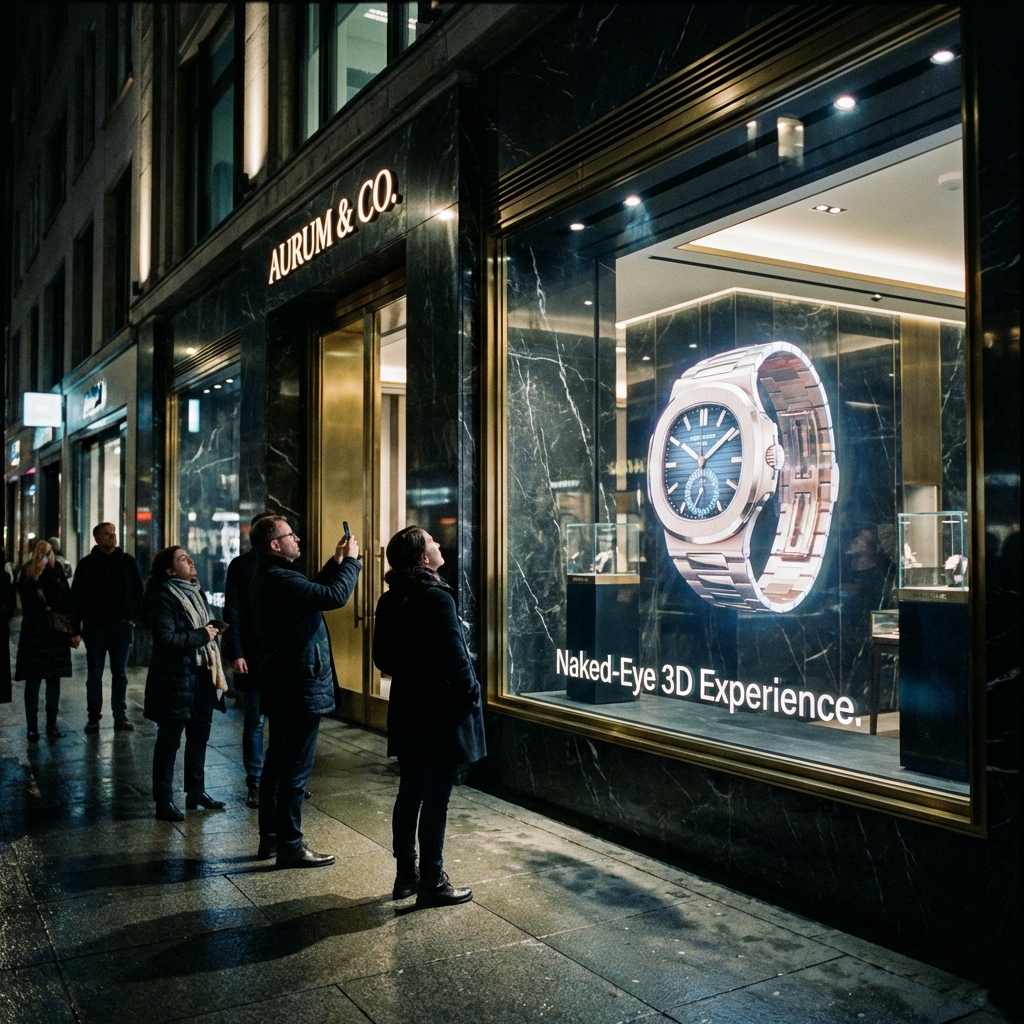
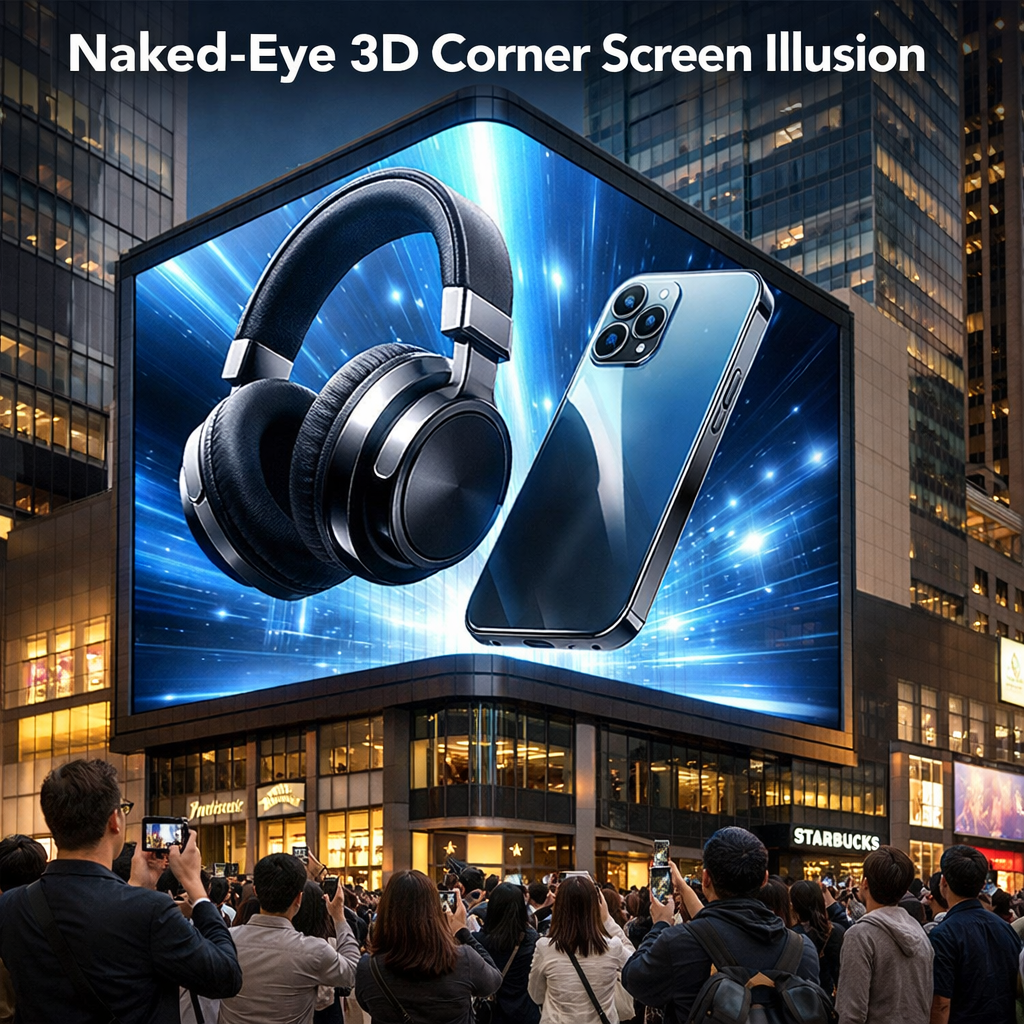
How Naked-Eye 3D Effects Work: Corner/Curved Structures and Content Perspective Design
3D outdoor LED screens don't use special glasses. Instead, they create depth illusion through:
- Corner or curved cabinet arrangement (typically 90° L-shape or gentle arc)
- Perspective-corrected content designed for a specific viewing angle
- High-precision calibration to align images across multiple planes
The effect only works from one optimal viewing position. Walk too far left or right, and the illusion breaks.
Additional Costs: Structural Precision, Calibration, and Specialized Content Production
Expect to pay:
- +30–50% for corner/curved structure vs flat screens
- $2,000–$10,000 per 3D video clip (depending on complexity)
- Extra calibration visits (2–4 per year to maintain effect)
A 50 m² 3D corner installation can cost $80,000–$120,000 total.
ROI Scenarios: High-Traffic Urban Locations, Flagship Brand Campaigns
3D screens make sense when:
- You're in a prime urban location (Times Square, Shibuya, Piccadilly Circus)
- Foot traffic exceeds 100,000 daily
- You're launching a flagship product or brand campaign
- The "wow factor" generates social media shares and PR coverage
For regular roadside advertising, stick with standard flat screens.
Application-Specific Requirements: Events, Sports, Retail, and DOOH Campaigns
Highway Billboards and Roadside Advertising
- Pixel pitch: P8–P10
- Brightness: 6,000+ nits
- Size: 20–100+ m²
- Special concern: Wind load calculations (typically designed for 150 km/h gusts)
Sports Stadiums and Live Event Screens
- Pixel pitch: P5–P8
- Refresh rate: 3,840 Hz minimum (prevents camera flicker)
- Special features: Instant replay capability, split-screen mode
- Mounting: Perimeter boards, scoreboard, ribbon boards
Retail Storefronts and Shopping Mall Facades
- Pixel pitch: P3–P6
- Creative options: Irregular shapes, transparent panels, integration with building design
- Special concern: Local sign codes and heritage building restrictions
For creative installations, custom irregular transparent LED displays offer unique architectural integration.
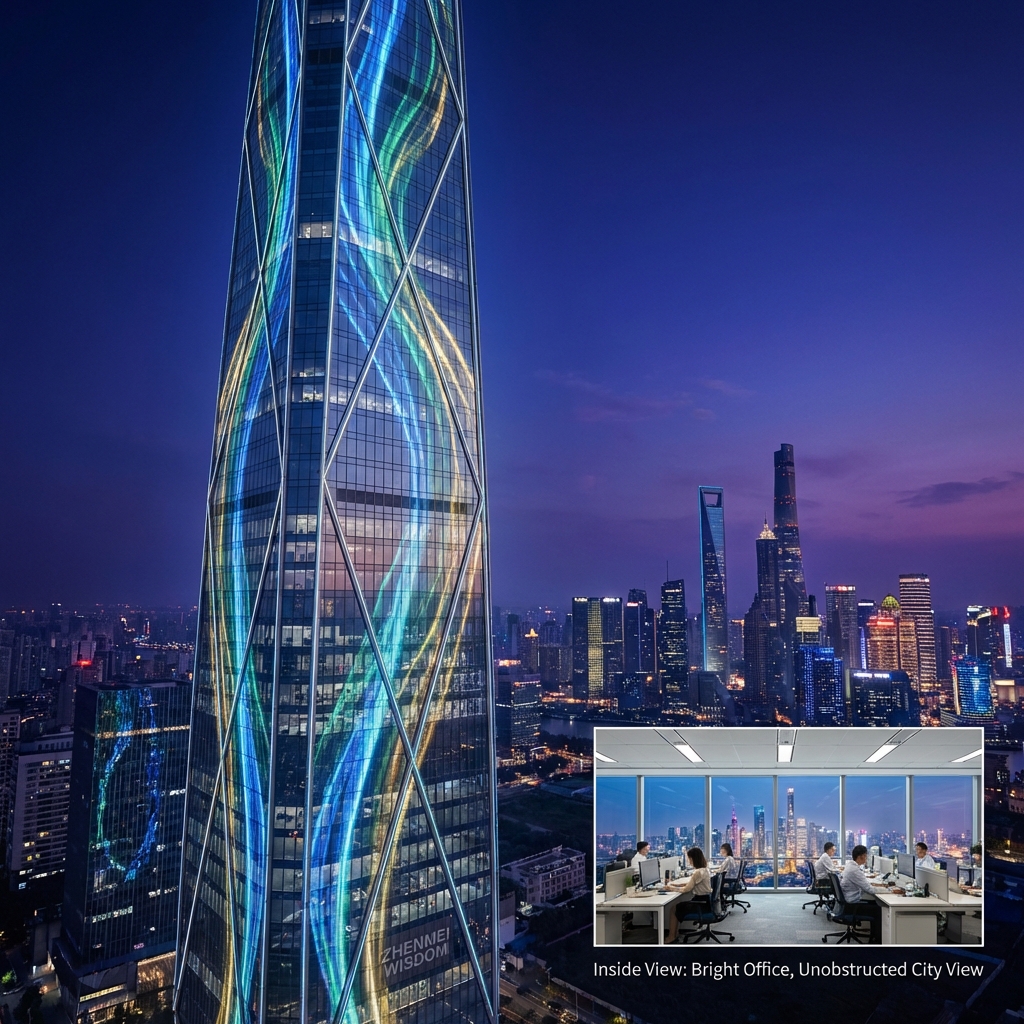
Urban Landmarks and Architectural Media
- Size: 100–1,000+ m²
- Special features: Building-integrated installation, artistic content programming
- Regulatory: Light pollution compliance, brightness zoning, content approval
Installation, Maintenance, and Reliability Considerations
Front-Service vs Rear-Service Access: Space Constraints and Maintenance Efficiency
Choose front-service when:
- Wall-mounted with no rear access
- Installation height >3 meters
- Maintenance windows are short (busy retail areas)
Choose rear-service when:
- You have at least 1 meter behind the screen
- Budget is tight (10–15% cheaper)
- Installation is ground-level or on a freestanding structure
Modular Redundancy: Hot-Swappable Power Supplies and LED Modules
Quality outdoor screens use:
- N+1 power supply redundancy (one extra backup always running)
- Quick-release module connectors (swap a faulty module in 2–3 minutes)
- Spare module storage built into the cabinet
This keeps your screen running even when components fail.
Remote Monitoring and Content Management: Cloud-Based CMS and Diagnostic Systems
Modern outdoor LED screens should offer:
- Real-time brightness and temperature monitoring
- Automatic failure alerts sent to your phone
- Remote content scheduling from any device
- Energy consumption tracking
Cloud-based systems cost $500–$2,000/year but save far more in maintenance visits and downtime.
Warranty Terms and After-Sales Support: What to Negotiate in Your RFQ
Standard warranty is 2 years on LED modules and 3 years on power supplies. Try to negotiate:
- 3 years full warranty (parts + labor)
- Response time guarantee (24–48 hours)
- 5–10% spare parts included in delivery
- On-site training for your maintenance team
- Extended warranty option (years 4–5)
Get warranty terms in writing before you pay.
How to Compare Outdoor LED Advertising Screen Suppliers in 2026
Technical Verification Checklist
Before you buy, verify:
- Brightness test: Ask for lux meter readings at center and corners
- IP certification: Request copy of IP65/IP66 test report
- Dead pixel rate: <0.0001% (no more than 1 dead pixel per 10,000)
- Uniformity: <3% brightness variation across screen
- Color temperature: 6,500K ±300K
Don't trust marketing materials. Ask for test data.
Delivery and Logistics: Lead Time, Packaging, and Installation Support
Typical lead times:
- Standard products: 15–25 days after deposit
- Custom sizes/shapes: 30–45 days
- 3D/curved structures: 45–60 days
Make sure the supplier provides:
- Wooden crate packaging (not just cardboard)
- Installation drawings and manuals in your language
- On-site commissioning or at least video call support
- Customs documentation (HS codes, certificates of origin)
Case Studies and References: How to Request and Validate Supplier Project Portfolios
Ask every supplier for:
- Minimum 3 similar projects (same size, environment, application)
- Contact information for at least one reference customer
- Photos of completed installation (not just rendering)
- Verification video (supplier at the actual site with today's newspaper)
If they can't provide references, that's a red flag.
Red Flags to Avoid: Inflated Specs, Uncertified Components, and Vague Warranty Language
Walk away if the supplier:
- Claims brightness >10,000 nits without test data
- Won't specify LED brand or driver IC manufacturer
- Offers prices 40%+ below market average
- Uses vague warranty terms ("reasonable warranty period")
- Pressures you to pay full amount before delivery
Quality suppliers are transparent about components and testing.
RFQ Template: What to Include When Requesting Quotes for Outdoor LED Screens
Technical Requirements
Your RFQ should specify:
Screen dimensions: ___ m (W) × ___ m (H) = ___ m² totalPixel pitch: P___ (or "recommend based on viewing distance of ___ meters")Brightness: ___ nits minimum (specify measurement method)IP rating: IP65 / IP66 / other ___Operating temperature: ___ °C to ___ °CViewing distance: ___ metersInstallation type: wall-mounted / freestanding / other ___Orientation: portrait / landscape / custom shapeProject Scope
Include these details:
- Installation location: country, city, specific address (for wind/temperature data)
- Power supply: voltage and frequency available at site
- Control system: specify if you need media player, scheduling software, remote management
- Content creation: who will produce videos/images?
- Maintenance access: front / rear / either
Commercial Terms
Request clear breakdown of:
- Equipment cost (per m² and total)
- Shipping method and cost (sea freight, air freight, DDP/DDU)
- Installation support (on-site technician days and cost)
- Payment terms (typical: 30% deposit, 60% before shipping, 10% after commissioning)
- Warranty period (parts, labor, response time)
- Spare parts (percentage included, recommended stock list)
- Training (on-site days, language, materials provided)
Outdoor LED Display Screens for Advertising
What is the lifespan of an outdoor LED advertising screen?
Quality outdoor LED screens last 80,000–100,000 hours before brightness drops to 70% of original. At 12 hours/day operation, that's about 18–22 years. In practice, most screens are upgraded or replaced after 8–12 years as technology improves.
Can outdoor LED screens operate in extreme temperatures?
Standard outdoor screens handle -20°C to +50°C. For harsher climates:
- Below -30°C: Need heated cabinets
- Above +50°C: Need active cooling (air conditioning or liquid cooling)
Always match the screen's rated temperature range to your location's climate data.
Do I need special permits for outdoor LED advertising?
Almost always, yes. Common requirements include:
- Building permit for structural installation
- Electrical permit for power connection
- Sign permit specifying size, brightness, and location
- Content approval (some cities restrict messaging)
Check with local planning authorities before ordering your screen.
How do I prevent light pollution and comply with brightness regulations?
Use these strategies:
- Automatic dimming based on time of day (full brightness daytime, <150 nits after 10 PM)
- Directional light control (avoid pointing toward residential areas)
- Motion sensors (dim when no audience detected)
- Compliance monitoring (built-in lux meters to prove regulatory compliance)
Many cities now have specific brightness limits for outdoor digital signs.
What is the difference between rental LED screens and permanent installation screens?
Rental screens:
- Quick assembly/disassembly (for concerts, festivals, trade shows)
- Lighter cabinets (easier transport)
- Lower IP rating (IP54 typical)
- Higher cost per m²
- Shorter lifespan (5–7 years)
Permanent installation screens:
- Designed for 24/7 outdoor operation
- Weatherproof (IP65+)
- Heavier, more robust structure
- Lower cost per m²
- Longer lifespan (10+ years)
Don't use rental screens for permanent installations—they won't last.
References
World Out of Home Organization (WOO). "Global OOH Spend in 2024—Forecast for 2025." OOH TODAY, 2025. https://oohtoday.com/ooh-global-spend-in-2024-forecast-for-2025/
Grand View Research. "Digital Out-of-Home Advertising Market | Industry Report 2030." 2024. https://www.grandviewresearch.com/industry-analysis/digital-out-of-home-advertising-market-report
International Electrotechnical Commission. "IEC 60529: Degrees of Protection Provided by Enclosures (IP Code)." 2013.
Linsn LED. "LED Display Power Consumption - How Much." 2025. https://www.linsnled.com/led-display-power-consumption-how-much.html
Senda Digital Signage. "Optimal Brightness for Digital Signage Screens: How Bright Should Your Display Be?" 2025. https://www.sendadigitalsignage.com/News/digitalsignagemonitorscreenbrightness_guide.html
Alibaba SmartBuy. "How to Choose LED Screen Outdoor Advertising: Buying Guide." 2025. https://smartbuy.alibaba.com/buyingguides/led-screen-outdoor-advertising
Cinstar LED. "How 3D LED Displays Are Transforming Outdoor Digital Advertising Venues." 2025. https://www.cinstar-led.com/led-academy/3d-led-displays-for-outdoor-digital-advertising-venues.php