Description: Wondering if LED holographic screens can run 24/7 for your business? This guide covers durability, power consumption, maintenance, and how to choose the right display for continuous operation. Get expert insights for 2025.
As someone who has been deeply involved in the digital display industry for years, I've seen technology evolve at an incredible pace. I remember the first time I saw a spinning LED hologram display create a seemingly real 3D object out of thin air—it was pure magic. A common question I hear from clients is, "This is amazing, but can it really run all day, every day?" It’s a valid concern, especially when you're considering a significant investment for your business.
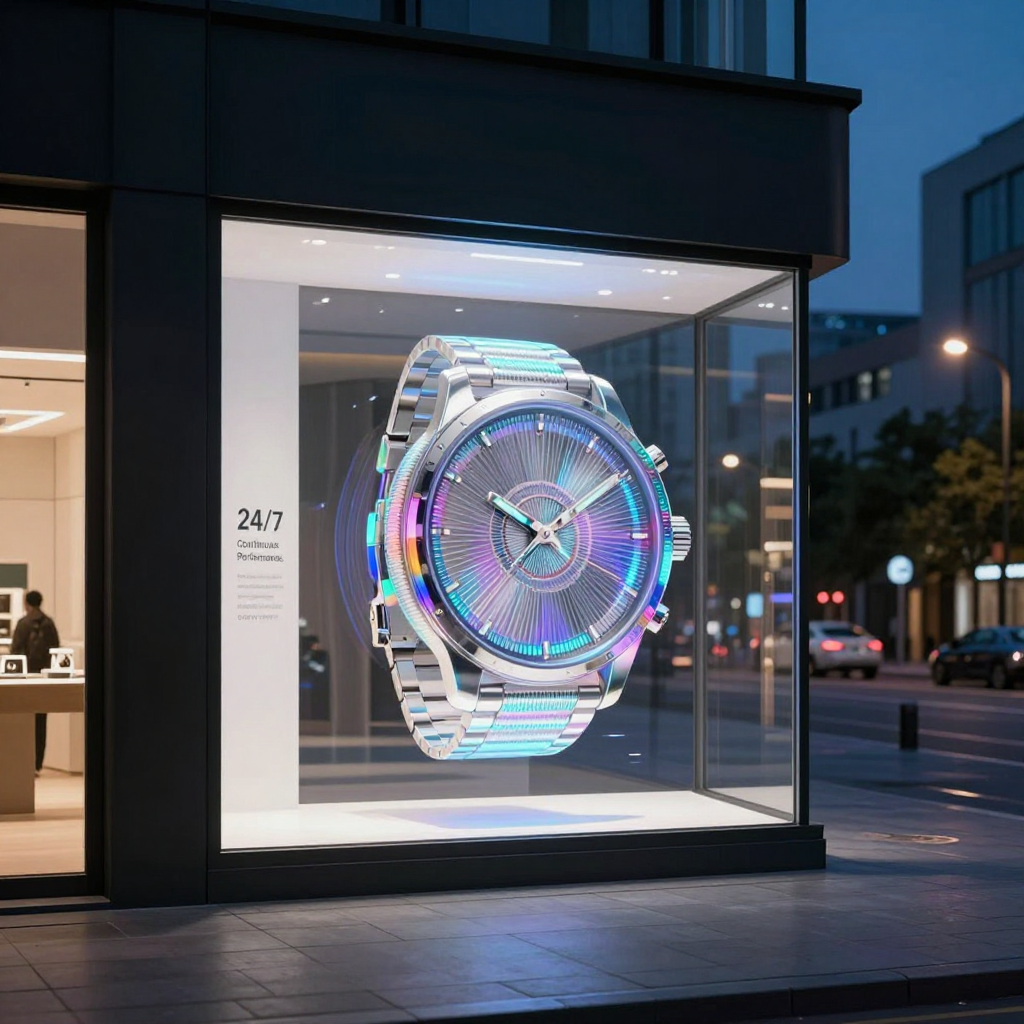
The short answer is yes, but the long answer involves understanding the technology, its limits, and the best practices to ensure longevity. Let's dive deep into whether these futuristic displays are ready for the non-stop demands of the commercial world.
Key Insights on 24/7 LED Holographic Screen Operation
Here are some quick takeaways for those in a hurry:
- Can LED holographic screens run continuously? Yes, high-quality holographic displays are specifically engineered for continuous, 24/7 operation. However, their longevity depends on proper management, including cooling and maintenance.
- What is the average lifespan for continuous use? A commercial-grade holographic LED display typically has a lifespan of 50,000 to 100,000 hours. This translates to over 5 to 11 years of non-stop operation, though this can vary based on environmental conditions and usage patterns.
- Are they energy-efficient for constant operation? Absolutely. Modern LED technology is remarkably energy-efficient compared to traditional screens. While they consume more power than when they are off, their consumption is manageable and a key factor to monitor for long-term use.
- Is overheating a risk? It can be if not managed. That's why premium models are designed with advanced heat dissipation systems to prevent overheating during prolonged use.
- Do they require a lot of maintenance? Maintenance is surprisingly low but crucial. It mainly involves regular cleaning and ensuring the device has proper airflow.
- Are they suitable for outdoor use? Some models are! Specially designed outdoor-rated holographic LED screens come with weatherproof casings and higher brightness levels to combat sunlight.
Understanding the Core Technology of LED Holographic Displays
Before we can talk about running a device 24/7, it's essential to understand what’s happening inside. LED holographic screens are not projecting holograms in the "Star Wars" sense. Instead, they use a brilliant optical illusion to create stunning 3D visuals that appear to float in mid-air.
How do holographic displays create 3D floating images?
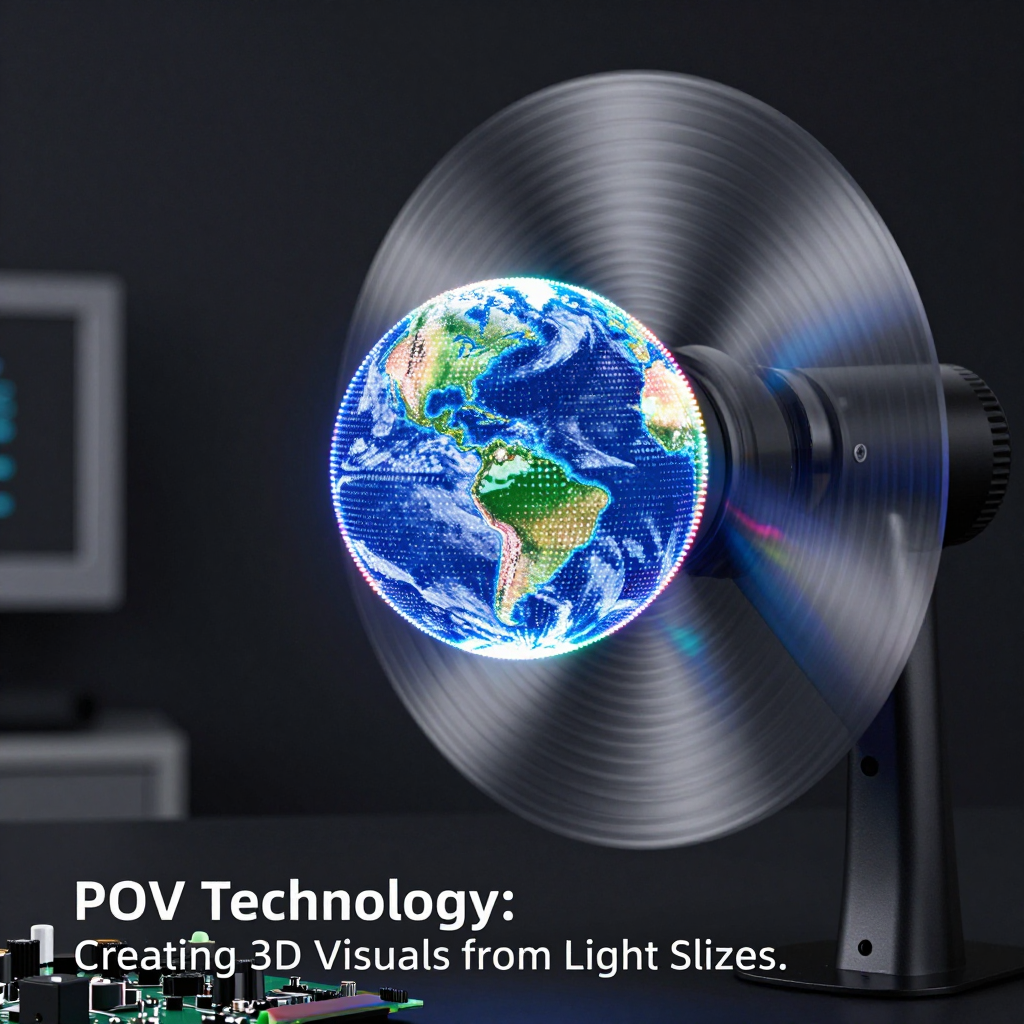
The magic behind most spinning LED hologram displays is a principle called "Persistence of Vision" (POV). It works like this: a bar or "fan" with a strip of high-density RGB LEDs spins at a very high speed. As it rotates, the LEDs light up at precise moments, painting slices of an image in the air. Our brain processes these rapidly changing slices so quickly that it blends them into a single, complete, and solid-looking 3D image. This high-speed rotation and precise LED control are what make the display itself seem to disappear, leaving only the vibrant, floating content.
Key Components: What makes up a durable LED holographic fan?
Not all holographic displays are created equal, especially when it comes to 24/7 operation. The durability of a unit depends on the quality of its core components:
- LEDs: High-quality LED beads ensure consistent brightness, accurate colors, and a long operational life.
- Motor: The motor is the heart of the device. A brushless, industrial-grade motor is essential for quiet, stable, and long-lasting rotation without overheating.
- Power Supply: A reliable power supply unit (PSU) protects the device from power fluctuations and ensures it receives stable energy for continuous operation.
- Control Board & Processor: These components manage the content and synchronize the LEDs. A powerful processor ensures smooth playback of complex animations.
Difference between holographic and transparent LED displays
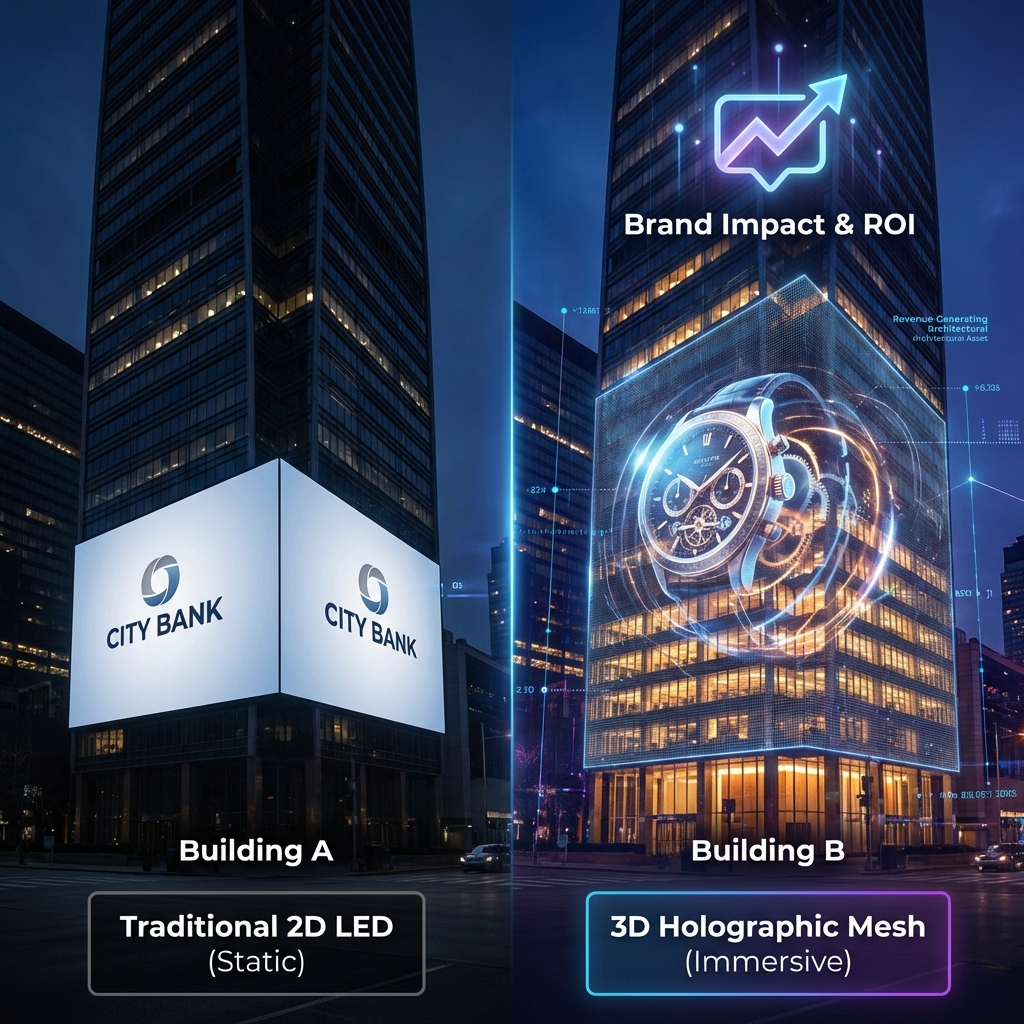
While both technologies offer futuristic visual experiences, they serve different purposes. A holographic LED screen display excels at creating eye-catching, floating 3D product visuals or logos. It's designed to be a focal point.
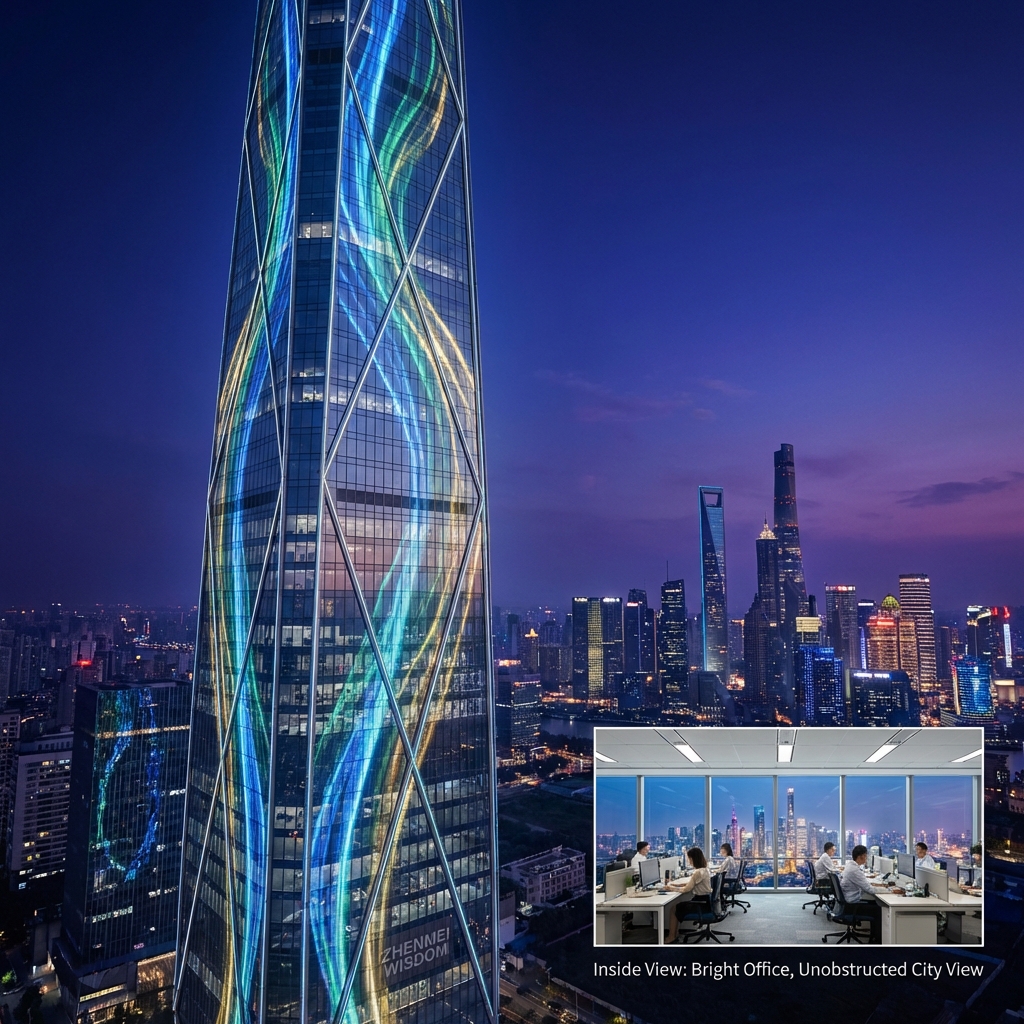
In contrast, a transparent LED display, another specialty of ours, allows you to see through the screen itself. It turns a glass facade or window into a digital canvas without completely blocking the view from inside or outside. Choosing between them depends on your goal: do you want a show-stopping centerpiece or a seamless architectural integration?
Key Factors Affecting the Durability and Longevity of LED Holographic Screens
Running any electronic device 24/7 puts it under stress. For LED holographic screens, three main factors determine whether they can withstand the marathon: heat, component quality, and the environment. Understanding these will help you maximize your investment and ensure your display shines brightly for years to come.
Heat Dissipation: Can holographic LED displays run continuously without overheating?
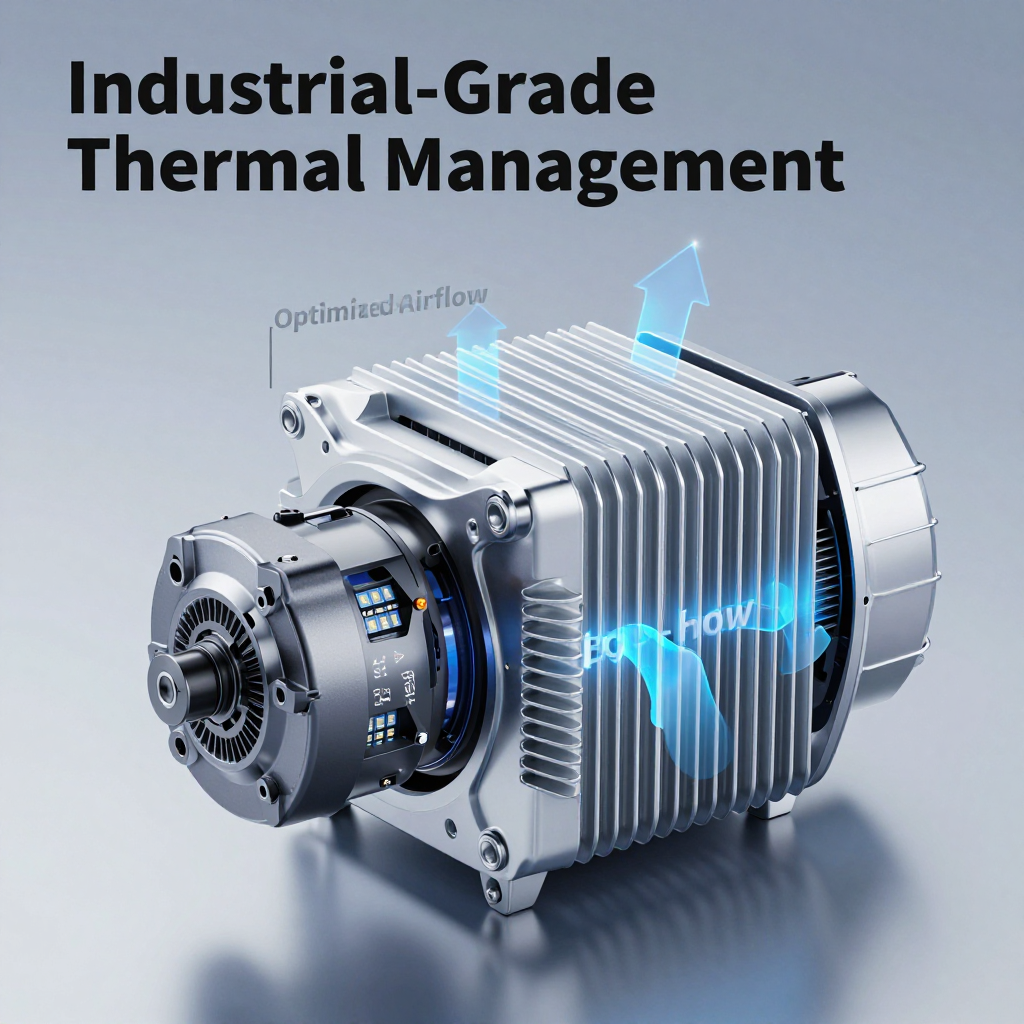
Heat is the number one enemy of electronic components, especially LEDs. Continuous operation generates a significant amount of heat from both the motor and the LEDs themselves. Without effective heat dissipation, this can lead to decreased brightness, color shifts, and a drastically shortened lifespan.
High-quality holographic screens are engineered with this in mind. They often feature:
- Passive Cooling: Heat sinks made of aluminum or other conductive materials draw heat away from the core components.
- Active Cooling: Some larger or high-power models may include small, quiet fans to actively circulate air.
- Optimized Design: The chassis is often designed with vents to promote natural airflow, preventing heat from getting trapped inside.
Proper ventilation is non-negotiable for 24/7 use. Ensure the device isn't placed in a tight, enclosed space where air can't circulate freely.
Component Quality: The role of LEDs, motors, and power supplies
As mentioned earlier, you get what you pay for. For 24/7 applications, investing in a unit with industrial-grade components is crucial. Cheaper, consumer-grade models might look impressive for a short while, but their motors aren't built for constant rotation, and their power supplies can fail under continuous load. A premium manufacturer like Zhenmei Wisdom focuses on sourcing and integrating high-quality components designed for commercial endurance, ensuring a stable and reliable performance day in and day out.
Environmental Conditions: Impact of dust, humidity, and temperature
Where you install your holographic display matters immensely. The ideal environment is a climate-controlled indoor space.
- Dust: Over time, dust can accumulate on the fan blades and inside the unit, acting as an insulator that traps heat and can potentially unbalance the spinning blades.
- Humidity: High humidity can lead to moisture condensation on electronic components, causing short circuits and corrosion.
- Temperature: Extreme ambient temperatures, both hot and cold, can strain the device's components and affect performance.
For installations in more challenging environments, such as semi-outdoor locations or industrial settings, look for units with a protective cover or an IP (Ingress Protection) rating that certifies their resistance to dust and moisture.
Power Consumption and Efficiency: The Real Cost of 24/7 Operation
When a display is running 24/7, its power consumption becomes a significant operational cost. Fortunately, LED technology is inherently efficient, and the holographic display market is benefiting from continuous innovation in this area.
According to research from IEEE, recent advancements have led to a 30% improvement in power consumption reduction in modern LED screens, making 24/7 operation more economically viable than ever.
Analyzing the energy efficiency of modern LED holographic screens
A typical commercial-sized spinning LED hologram display consumes anywhere from 30 to 100 watts, depending on its size and brightness. To put that in perspective, it's often less than a traditional LCD television of a similar visual impact. This efficiency is due to the fact that LEDs only consume power when they are lit. For content with a lot of black or empty space (which is common in holographic visuals), the power draw is significantly lower.
How brightness levels and content complexity affect power usage
Two main factors will influence your electricity bill:
- Brightness: The brighter the display, the more power it consumes. Most commercial units allow you to adjust brightness levels, so you can optimize it for the ambient lighting conditions. Running at 70-80% brightness instead of 100% can save considerable energy without a noticeable drop in visual quality.
- Content: A video with bright, solid white colors across the entire display will use more power than a simple, dark-background logo animation. When designing content, consider using darker color palettes to further enhance energy efficiency.
Comparing power costs: Holographic displays vs. traditional digital signage
Let's do a quick comparison. A 55-inch commercial LCD screen running 24/7 can consume around 150-250 watts. A holographic fan creating a similarly sized image might only use 60-80 watts. Over a year, this difference adds up to significant savings in operational costs, making holographic technology not just visually impressive but also economically smart for continuous advertising.
Maintenance Best Practices for Constant Operation
While high-quality LED holographic screens are built to be low-maintenance, "low" doesn't mean "no." A simple, consistent maintenance routine is the key to ensuring your display operates flawlessly for its entire lifespan. Neglecting these basic steps is the quickest way to encounter performance issues.
How to maintain holographic LED screens for constant operation: A routine checklist
Here is a simple checklist you can follow to keep your display in top shape:
- Weekly:
- Visual Inspection: Check for any signs of wobble or unusual noise, which could indicate an imbalance.
- Content Check: Ensure the content is playing correctly without glitches.
- Monthly:
- Power Down and Clean: Safely power down the unit. Use a soft, dry microfiber cloth or a can of compressed air to gently remove dust from the LED blades and the chassis.
- Check Connections: Make sure all power and data cables are securely plugged in.
- Annually:
- Professional Check-up: Consider having a professional service check the motor's health and internal components, especially for mission-critical installations.
The importance of proper ventilation and regular cleaning
We've talked about heat, but dust is its evil twin. Dust buildup on the blades can cause two problems. First, it can create a slight imbalance, putting extra strain on the motor over time. Second, it insulates the components, trapping heat and reducing the effectiveness of the cooling system. Regular, gentle cleaning is a simple five-minute task that can add years to the life of your display.
When is professional servicing required for 24/7 commercial holographic screens?
You should contact your provider for professional service if you notice any of the following:
- Persistent, loud, or unusual noises (grinding, clicking).
- Visible wobble or vibration during operation.
- Flickering LEDs or dead pixels that don't resolve with a reboot.
- The unit fails to power on or shuts down intermittently.
Attempting to service the motor or internal electronics yourself can be dangerous and may void your warranty. Always rely on a qualified technician for complex issues.
Are LED Holographic Displays Suitable for Demanding Commercial Applications?
The answer is a resounding yes. The LED display market is booming, with a projected market size of $5.8 billion in 2023 and a strong growth rate. Holographic displays are at the forefront of this growth, captivating audiences in ways traditional media cannot. They are no longer just a novelty; they are a powerful and reliable business tool.
The benefits of running holographic displays around the clock
For businesses in retail, advertising, and entertainment, the ability to run a display 24/7 is a game-changer.
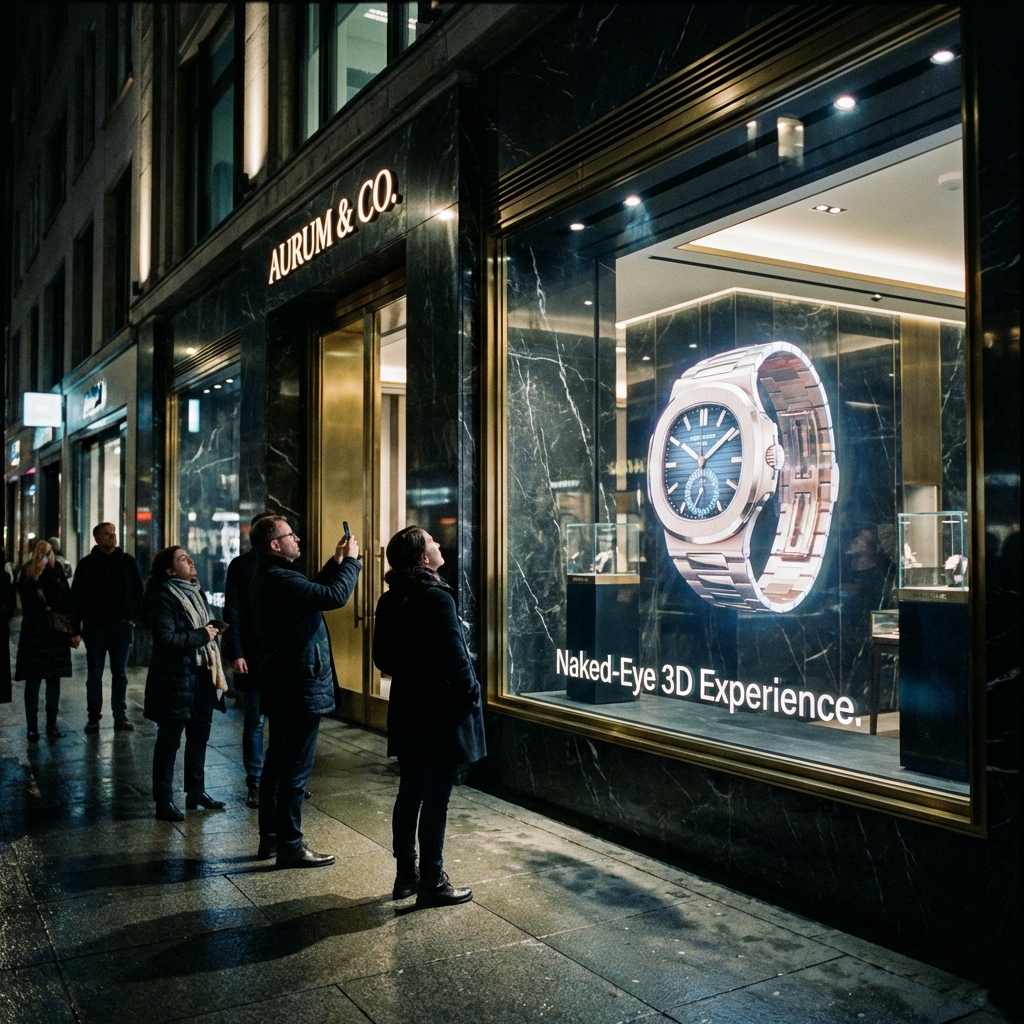
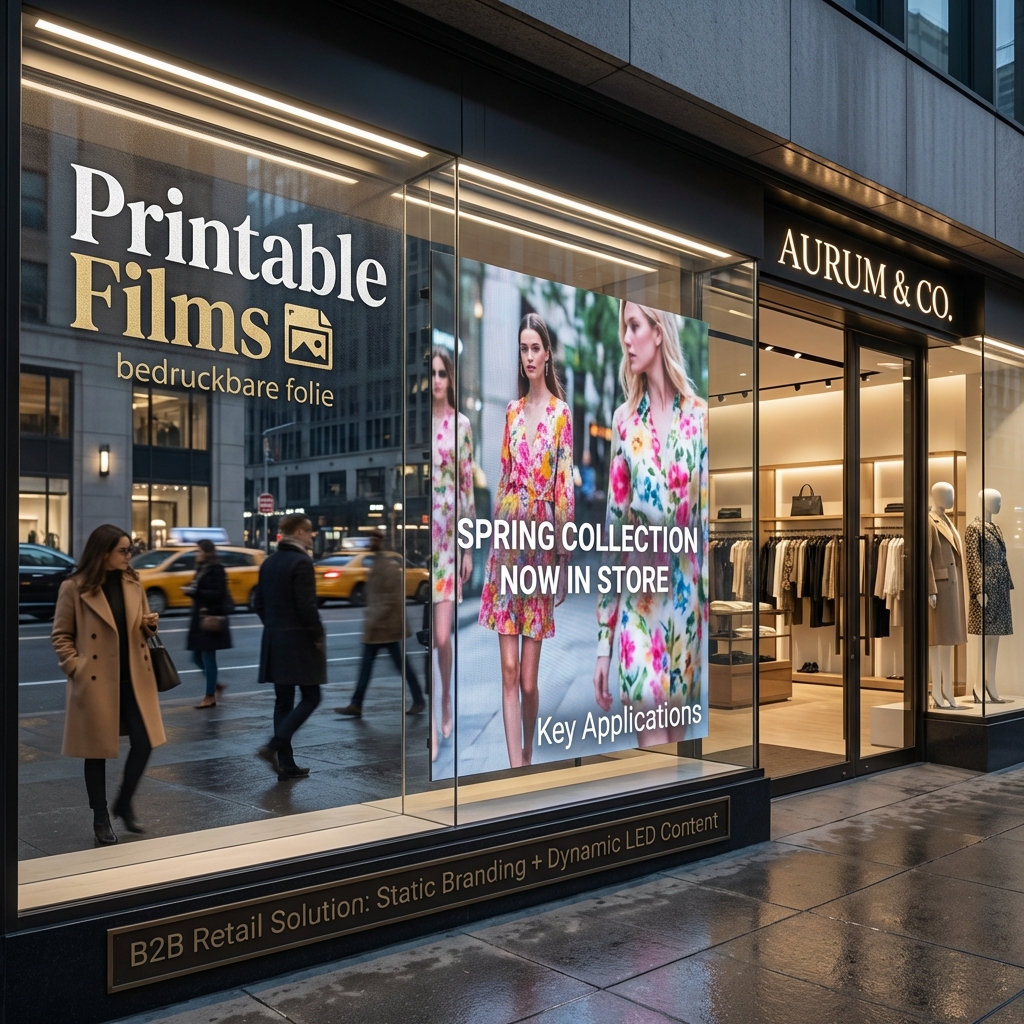
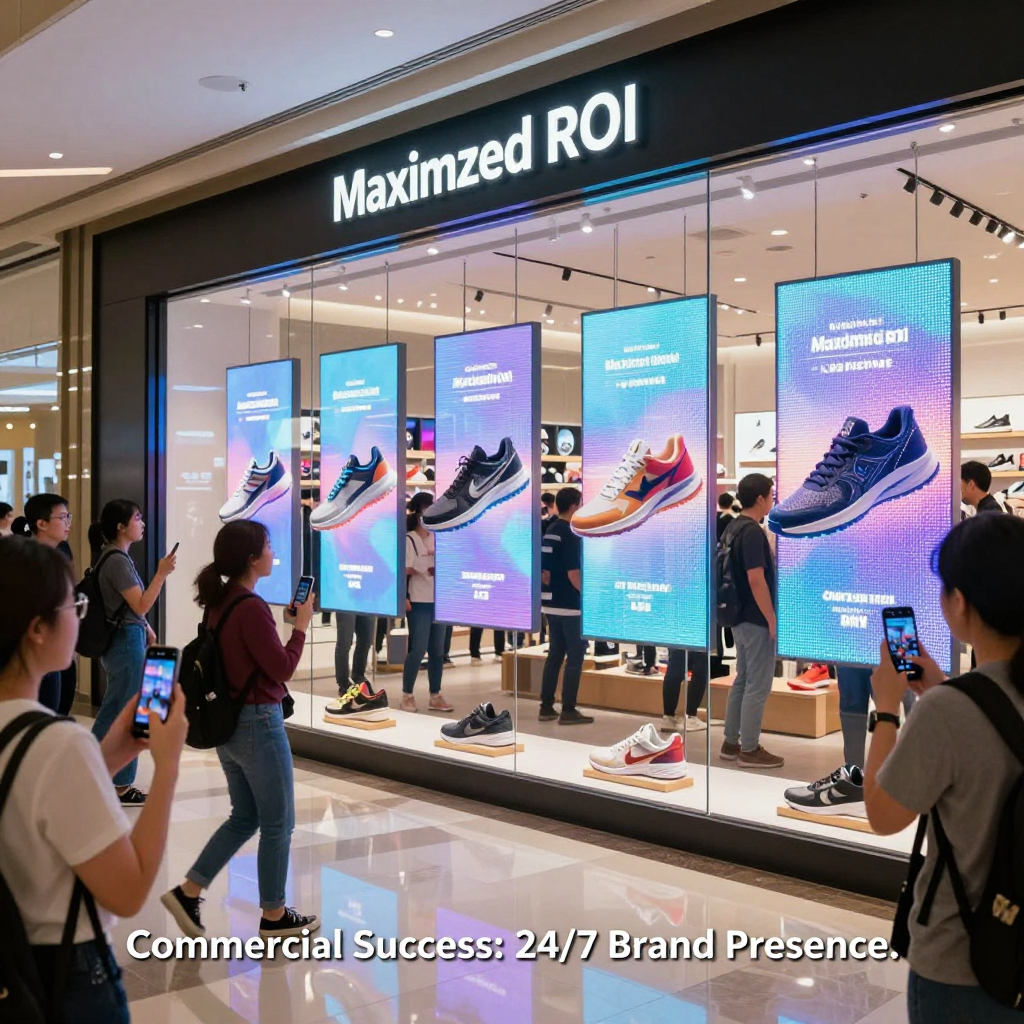
- Constant Brand Presence: Your message is always on, capturing the attention of passersby day and night in a storefront window or shopping mall.
- Maximized ROI: The more your display runs, the more impressions it generates, maximizing the return on your initial investment.
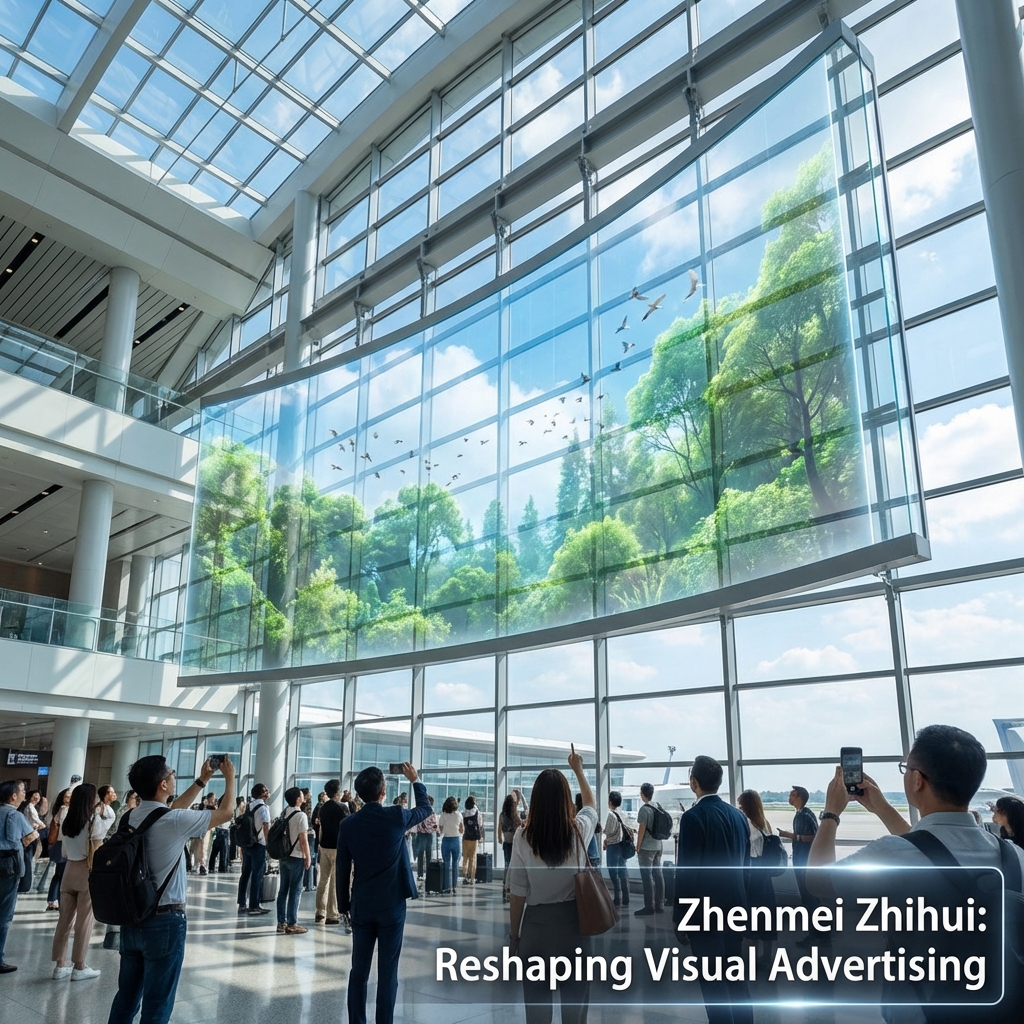
- Enhanced Ambiance: In venues like nightclubs, hotels, or airports, a continuously running holographic display can contribute to a modern, high-tech atmosphere.
Today’s consumers are bombarded with ads. To stand out, you need to offer an experience, not just an image. 24/7 holographic displays create a persistent 'wow' factor that sticks in a customer's memory.
Potential challenges: Addressing content management and operational oversight
Running a display 24/7 also brings challenges. You need a robust content management system (CMS) that allows you to schedule content, update playlists remotely, and monitor the display's status without needing to be physically present. Additionally, you should have a plan for what happens in case of a power outage or a technical glitch. High-quality systems often feature remote diagnostics and auto-restart functions to minimize downtime.
Case Studies: Successful 24/7 use of LED holographic screens in business
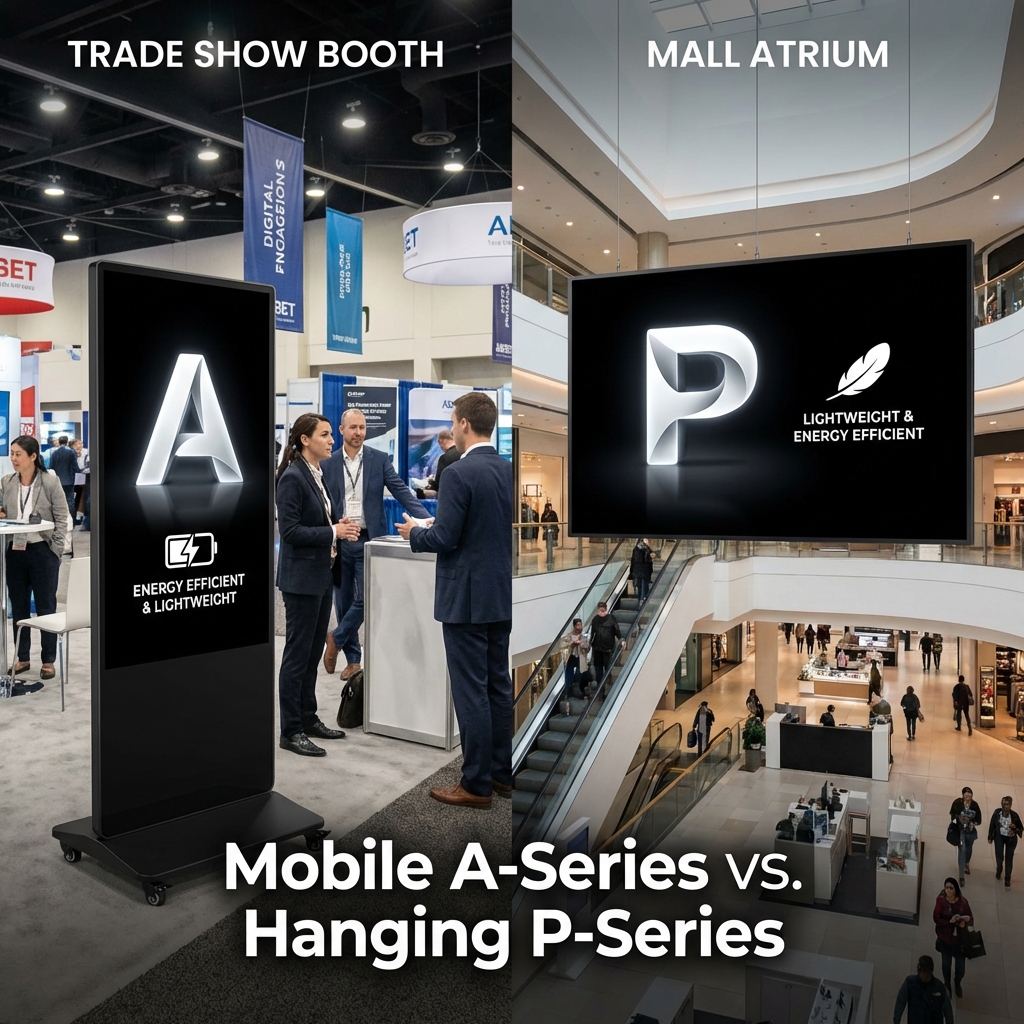
We are seeing incredible applications across various industries. A major shoe brand uses a fleet of holographic fans in its flagship stores worldwide, running 24/7 in their window displays to showcase floating, rotating 3D models of their latest sneakers. This has not only increased foot traffic but also boosted social media engagement as shoppers stop to record the mesmerizing visuals. Similarly, trade show exhibitors use them to run non-stop product demonstrations, drawing massive crowds to their booths.
Why Zhenmei Wisdom's Solutions Are Built for Reliability
At Zhenmei Wisdom, we don't just sell products; we deliver reliable, long-term visual solutions. We understand that for our clients, uptime is everything. That’s why durability and performance are at the core of our design and manufacturing process.
Our focus on innovation: Engineering high-quality LED holographic screens for continuous use
Our R&D team is dedicated to pushing the boundaries of what holographic technology can do. We achieve superior reliability by focusing on the fundamentals:
- Industrial-Grade Motors: We use high-performance brushless motors engineered for tens of thousands of hours of continuous, quiet operation.
- Premium LED Chips: Sourcing top-tier LEDs ensures our displays maintain their brightness and color accuracy over their long lifespan.
- Advanced Thermal Management: Our designs incorporate robust heat sinks and optimized airflow paths to keep components cool, even under constant load.
Showcasing durability through successful global projects
Our track record speaks for itself. From large-scale architectural installations to demanding retail rollouts, our LED holographic screens have proven their durability in real-world, 24/7 environments. Our clients trust us to deliver displays that not only look stunning but also perform reliably, day after day. We've helped businesses create unforgettable brand experiences that operate around the clock.
Comprehensive support and customization for your creative needs
We know that every project is unique. That’s why we offer comprehensive support, from initial concept to installation and beyond. Whether you need a single display or a fully synchronized network of holographic fans, our team can provide a customized solution tailored to your specific needs. Our commitment is to be your long-term partner in visual innovation.
Frequently Asked Questions
What industries use LED holographic displays?They are popular in retail, advertising, entertainment (concerts, events), trade shows, museums, and corporate lobbies. Essentially, any industry looking to create a high-impact visual experience can benefit.
Are holographic LED screens suitable for outdoor use?Yes, but you need a specific outdoor-rated model. These units come with weatherproof enclosures to protect against rain and dust, as well as much higher brightness levels to remain visible in direct sunlight.
How much does a holographic LED display cost?The cost varies widely based on size, resolution, brightness, and features. Smaller, entry-level models can be found for a few hundred dollars, while large, commercial-grade, networkable units can cost several thousand dollars each.
Maximizing Your Investment in 24/7 Holographic Displays
So, can LED holographic screens run 24/7? The answer is a definitive yes—provided you choose a high-quality, commercial-grade device and follow basic maintenance practices.
The technology has matured far beyond being a simple gimmick. It is now a robust, energy-efficient, and incredibly effective tool for businesses looking to captivate audiences and stand out from the competition. By investing in a reliable solution, you ensure that your message is not just seen, but remembered. With the right technology and care, a holographic display can be a cornerstone of your visual marketing strategy for years to come.
Ready to bring your brand to life with a stunning, durable 3D holographic display?
Contact Zhenmei Wisdom today to explore our innovative and reliable holographic solutions tailored for your business needs!