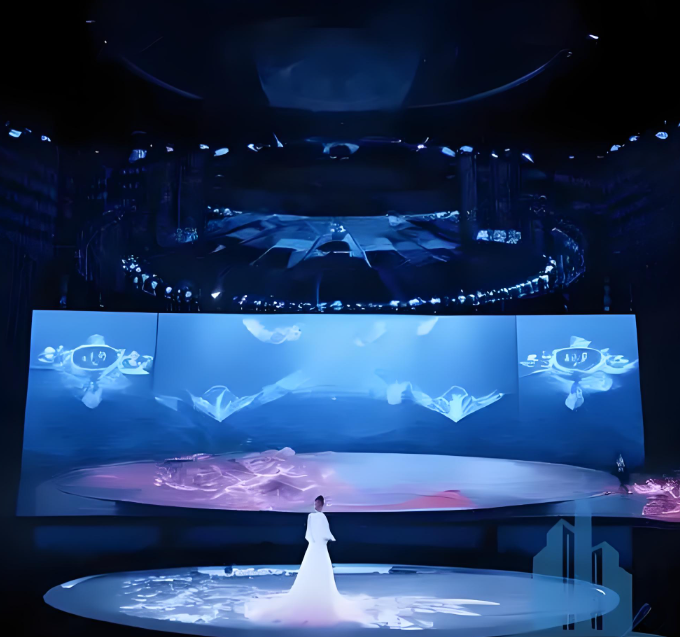
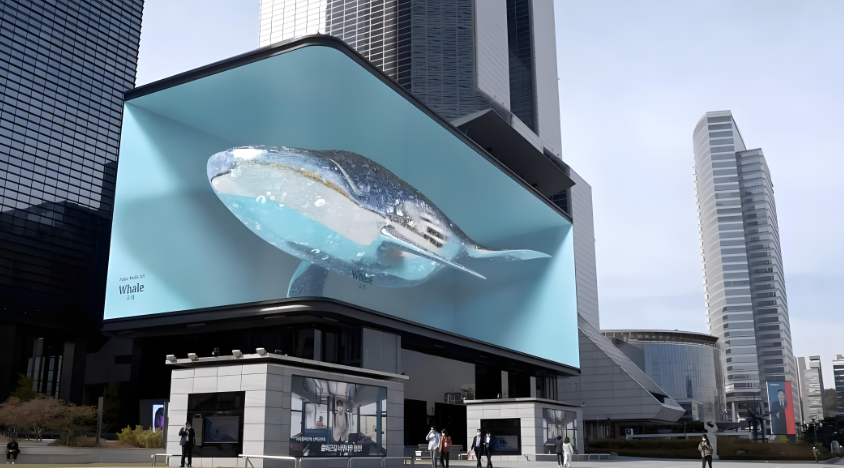
In today's rapidly changing retail landscape, traditional models are facing unprecedented challenges. Consumers are no longer satisfied with simple transactions; they crave more immersive, personalized, and interactive shopping experiences. It's against this backdrop that transparent displays, with their unique appeal, are quickly emerging as a shining star in smart retail, unlocking endless possibilities for innovation.
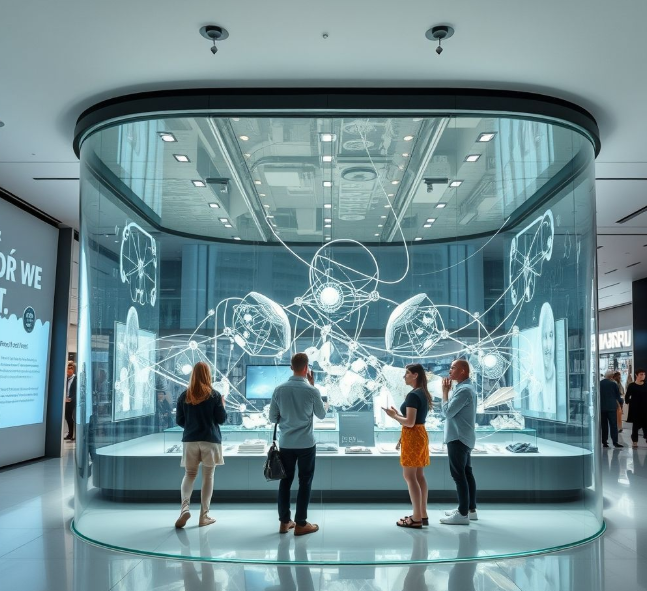
What Are Transparent Displays? The Future Window for Retail Innovation
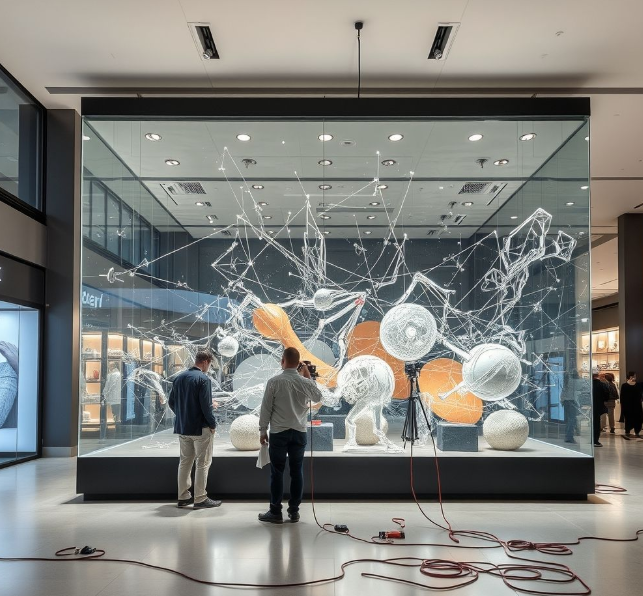
You've probably seen various types of displays, but does "transparent display" sound a bit sci-fi? Simply put, a transparent display is a display technology that allows you to see both the content displayed on the screen and the real objects behind it simultaneously. It's no longer a traditional "blackboard" but more like a glass window that can play dynamic visuals.
The core of this technology lies in its high transparency. When not displaying content, the screen is almost completely transparent. When content is displayed, text, images, and videos appear to float, perfectly blending with the physical objects in the background. This is fundamentally different from common liquid crystal displays (LCD) or light-emitting diode displays (LED). Traditional displays are completely opaque, used to block out the background; transparent displays, however, aim to enhance and complement the background, creating an entirely new visual effect.
Why Does Smart Retail Need Transparent Displays? Disrupting Tradition and Enhancing the [Customer Experience]
In fierce market competition, retailers are constantly seeking new growth points and differentiated advantages. Traditional billboards, posters, and static displays struggle to capture the attention of the "screen generation." The emergence of transparent displays perfectly addresses smart retail's urgent need for innovation, interaction, and efficiency.
Breaking Boundaries, Creating Immersive Experiences: In traditional shop windows or shelves, products and information are separate. Transparent displays seamlessly integrate digital content with physical goods, making consumers feel as if they're in a futuristic, tech-filled store.
Sparking Curiosity, Boosting [Brand Appeal]: The unique display method itself is a powerful draw. When passersby see a product surrounded by "floating" information, animations, or AR effects, they are naturally attracted, and their dwell time significantly increases.
Data-Driven, Optimizing [Retail Efficiency]: Instead of passively waiting for customers, proactively offer personalized services. Transparent displays can integrate sensors and cameras to analyze customer behavior patterns, thus providing more precise recommendations and marketing information.
Space Saving, [Optimizing Store Layout]: Especially in prime commercial areas where space is at a premium, transparent displays can replace bulky traditional shelves and display cases, enabling multi-functional use of space and making stores appear more spacious and modern.
[Core Application Scenarios] for Transparent Displays in Smart Retail
Transparent displays offer immense imaginative potential, and in the smart retail sector, they are already beginning to show astonishing capabilities in several key areas.
Futuristic [Window Displays] and Interactive Advertising Imagine walking past a clothing store where the mannequins in the window aren't just wearing the latest outfits, but the transparent glass simultaneously displays information about the clothing's material, price, styling suggestions, or even a virtual fashion show! Customers can also touch the screen to view more styles or directly book a fitting. This blend of dynamic and static presentation is far more engaging than traditional posters.
[In-Store Shelves] and Augmented Reality (AR) Product Displays Inside the store, transparent displays can serve as cabinet doors or dividers for product showcases. When a customer picks up an item, the screen immediately displays detailed information about it, user reviews, production processes, or even virtual try-on effects. For example, in a cosmetics store, you could see the virtual effect of lipstick applied; in a jewelry store, the screen could show a diamond's 4C standards and certification information.
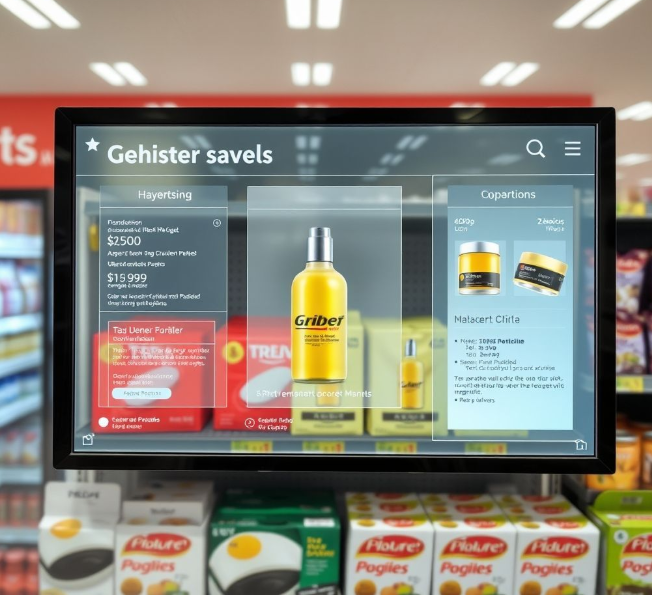
[Smart Fitting Mirrors] and Virtual Try-on Experience This is perhaps one of the most exciting applications of transparent displays. Traditional fitting rooms often involve queues and a cumbersome try-on process. A smart fitting mirror (usually based on transparent display or semi-transparent mirror technology) allows you to stand in front of it and virtually try on different clothes via the screen, quickly seeing how they look, and even placing an order with a single tap. This significantly boosts shopping efficiency and enjoyment.
[Interactive Kiosks] and Information Query Centers In large shopping malls or brand flagship stores, transparent displays can be transformed into information kiosks or interactive guidance screens. Customers can use the touchscreen to inquire about product locations, brand stories, promotional activities, or even interact with virtual assistants. This personalized self-service not only reduces staff workload but also enhances customer satisfaction.
[Dining and Entertainment] Integration, Creating Multi-Functional Scenes In cafes, restaurants, or bars, transparent displays can serve as tabletops or bar counters. While customers enjoy their food, the screen can play creative content, games, or even enable ordering and payment functions. This cross-industry integration offers consumers a brand-new entertainment and consumption experience.
[Significant Advantages] Transparent Displays Bring to Retailers
Deploying transparent displays isn't just "cool"; it delivers tangible business value to retailers.
Significantly Boost [Customer Engagement] and Dwell Time: Interactivity is the transparent display's killer feature. When customers can touch, select, or even play games to learn about products, their engagement significantly increases, and their time spent in the store extends accordingly. Studies show that interactive displays effectively boost customer interest.
[Optimize Space Utilization], Improve Sales Per Square Foot: Transparent displays can integrate multiple functions, combining display, advertising, interaction, and information inquiry into one, reducing the space occupied by traditional fixtures. This is a huge advantage for expensive retail spaces.
[Enhance Brand Image], Create a Tech-Savvy Feel: Adopting cutting-edge transparent display technology will undoubtedly leave consumers with a deep impression of your brand's "tech-savviness" and "innovation," elevating its high-end positioning and market competitiveness.
[Precise Marketing], Boost Sales Conversion Rate: By combining AI and big data, transparent displays can push personalized product recommendations and promotional offers in real-time, based on customer browsing history, dwell time, and other behavioral data, thereby significantly increasing purchase conversion rates.
[Reduce Long-Term Operating Costs]: Although the initial investment is higher, in the long run, transparent displays can replace a large number of paper posters, roll-up banners, and other disposable promotional materials, reducing printing and replacement costs. Content updates also become more flexible and convenient.
[Data Comparison] Transparent Displays vs. Traditional Display Methods: Performance Differences
To more intuitively understand the advantages of transparent displays, we can use a simplified data comparison table to illustrate their potential differences from traditional display methods across several key metrics. Please note that the following data is based on industry experience and forecasts, and actual results may vary depending on the application scenario and content quality.
| Metric Dimension | Traditional Static Display (Posters/Shelves) | Transparent Display Interactive Display | Improvement Range (Estimated) |
|---|---|---|---|
| Customer Dwell Rate | 10% - 15% | 30% - 50% | 100% - 300% |
| Interaction Duration | 5 - 10 seconds | 30 - 60 seconds | 500% - 1100% |
| Information Retention | Medium | High | Significantly Improved |
| Sales Conversion Rate | Baseline Level | 15% - 30% Increase | 15% - 30% |
| Brand Favorability | Stable | Significantly Enhanced | Noticeable |
| Content Update Frequency | Low (High Cost) | High (Low Cost) | Flexible & Convenient |
This table clearly illustrates the immense potential of transparent displays in terms of attractiveness, interactivity, and ultimate business impact.
[Future Outlook] New Trends for Transparent Displays in Smart Retail
The potential of transparent displays extends far beyond this. As the technology continues to mature and costs decrease, it will deeply integrate with more cutting-edge technologies, jointly shaping the future of smart retail.
Deep Integration with [Artificial Wisdom (AI)]: Future transparent displays will be even smarter. Through built-in AI visual recognition and voice interaction systems, they will be able to identify customers' gender, age, emotions, and even clothing style, and proactively recommend products and provide personalized services accordingly.
[5G Network] Empowering Ultra-HD Content Transmission: The high bandwidth and low latency characteristics of 5G will ensure that transparent displays can smoothly play 4K or even 8K ultra-high-definition video content, achieving a more realistic and fluid interactive experience, especially in scenarios like virtual try-ons and AR displays.
[Internet of Things (IoT)] Building a Fully Connected Experience: Transparent displays will become a crucial node in the IoT ecosystem, interoperating with other smart devices (such as smart sensors, robots, smart lighting) to collaboratively build a seamless, intelligent shopping environment. For example, when a certain product is low in stock, the transparent display will immediately show restocking information or recommend alternatives.
[Personalized Customization] and Immersive Experiences: As data analysis capabilities strengthen, future transparent displays will be able to offer highly personalized content displays for every customer entering the store. Combined with AR/VR technology, consumers will experience unprecedented immersive shopping journeys, such as "stepping into" virtual product assembly lines or "test driving" cars in a virtual environment.
[Cross-Industry Integration], Creating New Commercial Spaces: Transparent displays will not be limited to retail stores; they will appear in more public spaces such as offices, hotel lobbies, and airports, achieving multi-functional integration of information display, interactive entertainment, and commercial promotion, creating new business models.
[Considerations and Challenges] for Deploying Transparent Displays
Despite the broad prospects, when actually deploying transparent displays, you also need to consider some practical issues:
Initial Investment Cost: Compared to traditional displays, transparent display technology is still in its development phase, so initial procurement and installation costs are relatively high. You will need to conduct a detailed return-on-investment analysis.
Content Creation and Management: Content for transparent displays requires careful design, needing to be both aesthetically pleasing and effectively integrated with the physical background. High-quality interactive content production demands higher design and technical capabilities from the team.
Technical Integration and Maintenance: Integrating transparent displays with existing POS, CRM, inventory management systems, etc., requires professional technical support. Additionally, routine maintenance and troubleshooting of the equipment must be considered.
Environmental Lighting Impact: The display effect of transparent screens can be affected by ambient light. Under strong light, issues like glare or unclear display might occur. When designing the installation plan, the store's lighting conditions need to be thoroughly considered.
Frequently Asked Questions
Q1: Are transparent displays really expensive? A1: Compared to traditional displays, the initial investment for transparent displays is indeed higher. However, as the technology matures and mass production increases, costs are gradually decreasing. More importantly, you need to evaluate it from a long-term Return on Investment (ROI) perspective, as its value in enhancing brand image, customer experience, and sales conversion might far exceed its initial cost.
Q2: Is content creation for transparent displays complex? Do I need a specialized team? A2: High-quality content for transparent displays indeed requires professional creative and technical expertise. It's not just about playing videos; it also involves considering the integration of content with physical backgrounds, interactive logic design, and more. Many suppliers offer content creation services, or you can seek partnerships with professional digital content production companies.
Q3: Is maintenance for transparent displays troublesome? A3: Like all high-tech equipment, transparent displays require regular maintenance. However, modern transparent displays are typically designed to be very durable, and many suppliers offer remote diagnostics and maintenance services. Routine cleaning and simple troubleshooting are generally not complicated.
Q4: Are transparent displays suitable for all retail formats? A4: Transparent displays have a very wide range of applications, especially suitable for retail formats that need to emphasize product display, brand image, and customer interaction, such as fashion apparel, jewelry, electronics, beauty products, car showrooms, high-end dining, etc. For sectors with a wide variety of goods requiring extensive information display, its value is particularly prominent.
Transparent displays are more than just a cool technology; they represent a profound experience upgrade in the smart retail sector. With their unique transparency and powerful interactive features, they are fundamentally changing our perception of retail spaces and the shopping experience. From eye-catching window displays to intelligently interactive in-store showcases, and personalized virtual try-ons, transparent displays are helping retailers break free from traditional constraints, creating a more attractive, efficient, and futuristic shopping environment.
While initial investment and content creation may require some consideration, in the long run, the immense potential of transparent displays in boosting customer engagement, optimizing operational efficiency, enhancing brand image, and ultimately driving sales conversion makes them an indispensable part of your future retail strategy. Embracing transparent displays means embracing the future of retail, bringing an unprecedented immersive shopping experience to your customers. Now is the time to consider how to integrate this cutting-edge technology into your retail blueprint.